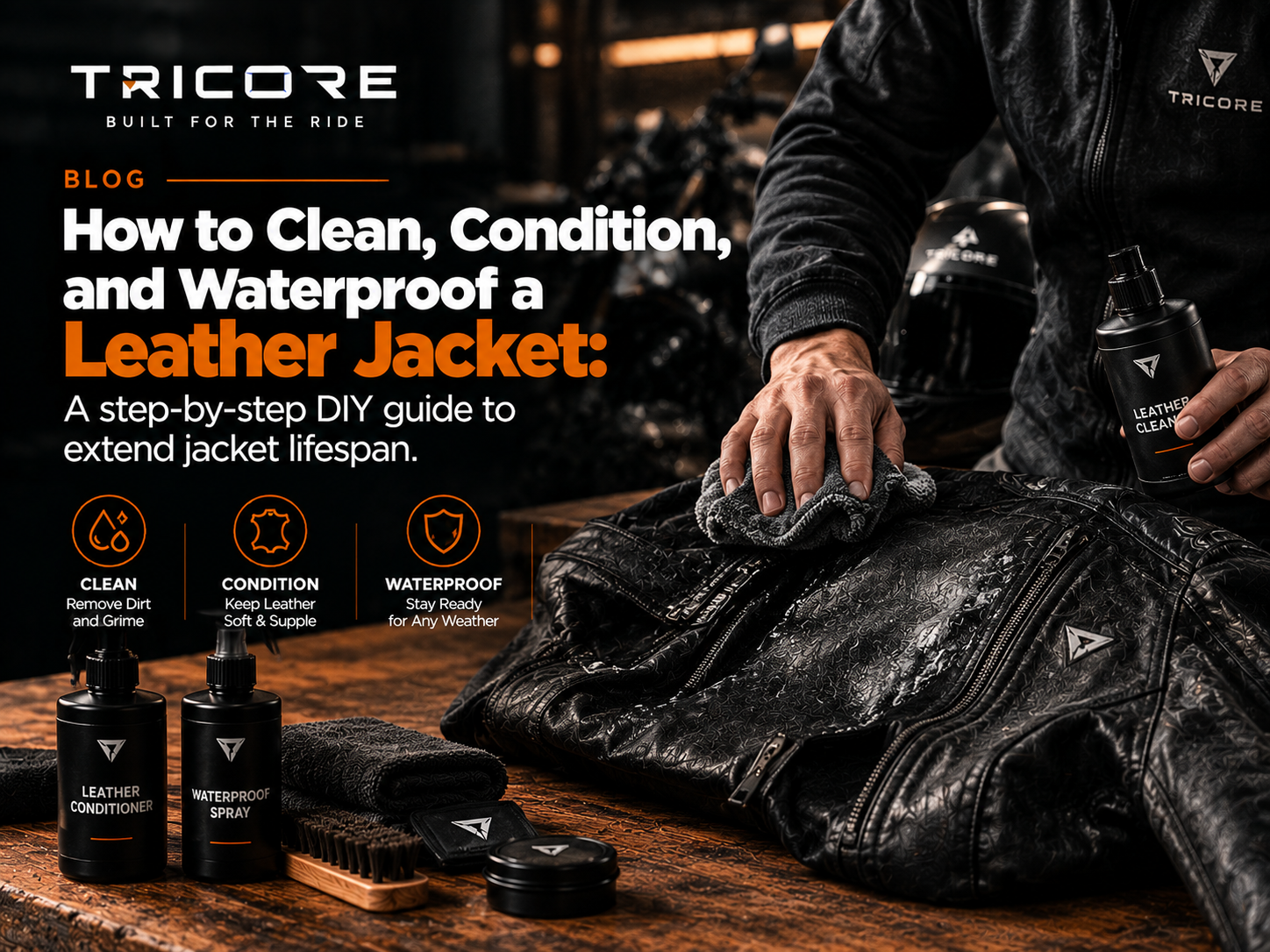
How to Clean, Condition & Waterproof a Leather Jacket: A step-by-step DIY guide to extend jacket lifespan.

Leather Jacket Care: Clean, Condition & Waterproof
How to Clean, Condition & Waterproof a Leather Jacket: A step-by-step DIY guide to extend jacket lifespan.
Quick answer: Clean a leather jacket by wiping off dirt with a soft cloth, using a leather-specific cleaner, air-drying it naturally, conditioning only when needed, and testing a compatible water repellent before use. Always check the care label and spot-test products first.
A genuine leather jacket is built to last decades, and at TriCore that’s the standard every jacket is crafted to meet. But longevity depends on care. Untreated leather can dry out, crack or stain, rain can leave watermarks, and harsh cleaners strip the natural oils that keep it supple. The good news is that routine care needs no specialist equipment.
This guide covers how to clean, condition and waterproof a leather jacket, plus common mistakes, storage and motorcycle jacket care. Whether you’ve just bought one of TriCore’s premium leather jackets, or you’re reviving one that’s seen too many rainy commutes, this routine will help it last.
01
KNOW YOUR LEATHER TYPE
Identify full-grain, lambskin, suede or coated leather before choosing cleaning products.
02
GATHER THE RIGHT SUPPLIES
Use a leather cleaner, suitable conditioner, water repellent, soft microfiber cloth and brush.
03
CLEAN GENTLY
Remove dust and dirt using a soft cloth and leather-specific cleaner.
04
CONDITION THE LEATHER
Apply a suitable conditioner to keep leather soft, flexible and prevent cracking.
KEEP YOUR LEATHER.
RIDE WITH CONFIDENCE.
Clean, Condition & Waterproof a Leather Jacket
Learn how to clean, condition and protect your leather jacket with simple care tips. Maintain its appearance, flexibility and durability for years.
TRICORE LEATHER JACKET ↗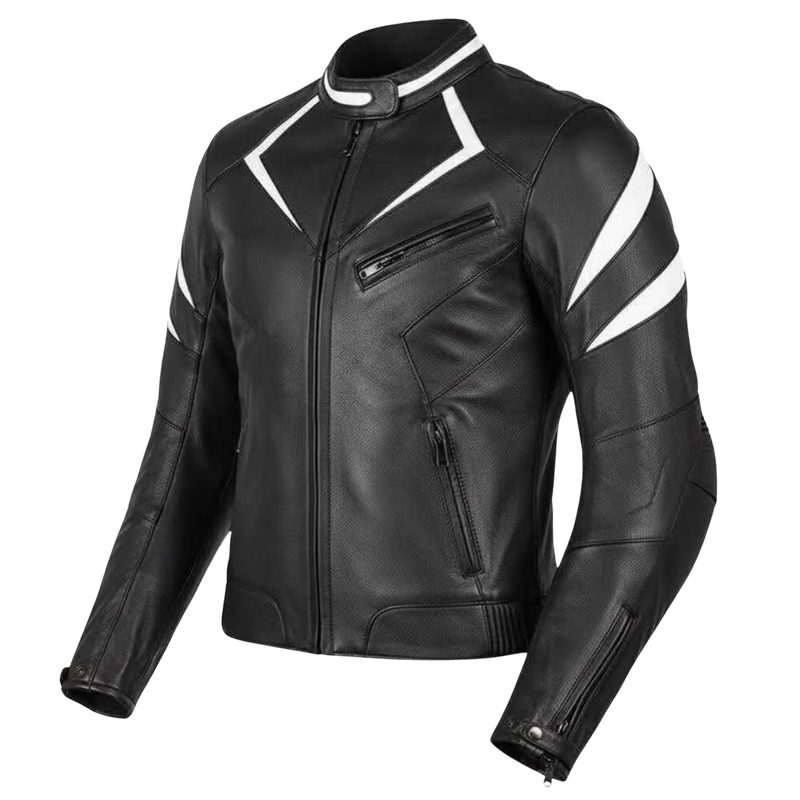
Know Your Leather Type
Identify Your Leather Type Before Cleaning
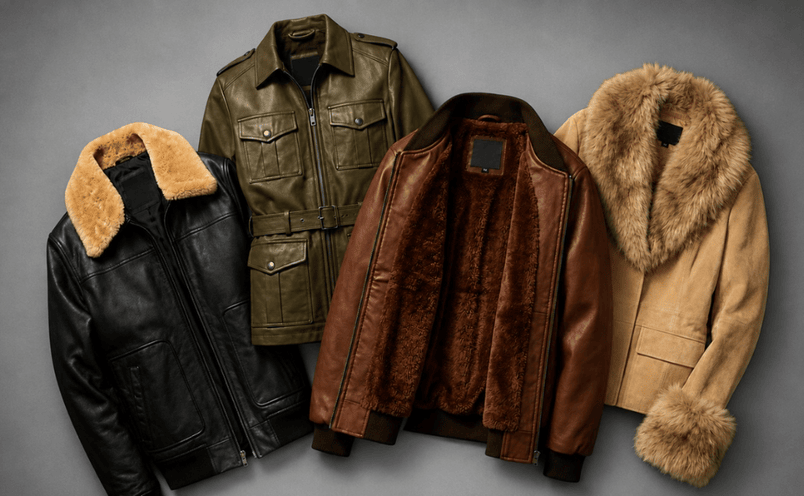
Not every leather jacket should be treated the same way. Methods that suit full-grain leather can damage suede or coated finishes, so identify your leather before reaching for any product.
Full-Grain and Top-Grain Leather
Both are durable and generally tolerate standard leather cleaners and conditioners, provided they suit the jacket’s finish.
Lambskin and Soft Leather Jackets
Softer and thinner than cowhide, lambskin needs gentler handling, lighter product application and extra careful spot-testing.
Suede and Nubuck Jackets
Their napped surface should never meet standard smooth-leather products. Use a suede brush and suede-specific cleaners.
Coated, Patent and Faux Leather
These sealed or synthetic finishes need different cleaning approaches, and some leather products can damage them.
Can you use the same cleaner on every leather jacket? No. Suede, nubuck and coated finishes each need different products, so check the care label and match your cleaner to your finish. If you’re shopping for a new piece, TriCore’s range of genuine leather jackets details the finish and recommended care for every style.
WATERPROOF SAFELY
Use a compatible water-repellent spray to improve protection against light rain.
STORE YOUR JACKET SMARTLY
Use a wide padded hanger and keep your jacket in a cool, dry and ventilated place.
DRY PROPERLY
Allow your jacket to air-dry naturally at room temperature, away from direct heat.
GIVE YOUR MOTORCYCLE JACKET SPECIAL CARE
Clean after dusty rides and regularly inspect zippers, seams and protective armour.
AVOID COMMON MISTAKES
Never use harsh chemicals, excessive water, washing machines or direct heat.
EXTEND YOUR JACKET'S LIFESPAN
Follow a regular care routine to maintain leather quality, appearance and durability.
Choose the Right Supplies
Gather the Right Leather Cleaning Supplies
Assemble supplies suited to your leather type:
- A soft microfiber cloth
- A leather-specific cleaner for your finish
- A soft brush (for suede or nubuck)
- A suitable leather conditioner
- A compatible water repellent
Products to Avoid
Household substitutes can cause lasting damage:
- Detergents, harsh solvents, and bleach, which strip oils and discolor leather
- Excessive water, which causes staining, stiffening, or warping
- Unverified oils or moisturizers, which can darken leather unevenly
Always check the care label and spot-test any product on a small, hidden area, such as an inner seam or cuff lining.
Step-by-Step: How to Clean a Leather Jacket
Step 1—Check the Care Label and Inspect the Jacket
Read the care label for the leather type and cleaning restrictions, and note any stains or dry patches.
Step 2—Remove Dust and Loose Dirt
Wipe the jacket down with a dry microfiber cloth. For suede or nubuck, use a soft brush to lift debris from the nap.
Step 3—Spot-Test the Leather Cleaner
Apply a little cleaner to a hidden area, let it dry fully, and check for discoloration or stiffness.
Step 4 — Clean Gently With a Soft Cloth
Apply the cleaner to your cloth, not the jacket, and wipe in gentle, even strokes, one small section at a time.
Step 5—Remove Product Residue as Directed
Some cleaners need wiping off with a slightly damp cloth; others are buffed dry. Follow the product directions.
Step 6—Allow the Jacket to Air-Dry Naturally
Hang the jacket on a wide, sturdy hanger in a ventilated room away from heat and sunlight. Never use a dryer, radiator, or hairdryer, as heat can crack or shrink leather.
How do you clean a leather jacket without damaging it? Identify your leather type, spot-test products, clean gently rather than scrubbing, and air-dry away from heat. Rushing or using an incompatible product causes most accidental damage.
Condition Your Leather
How to Condition a Leather Jacket
Why Leather Conditioning Matters
Conditioning keeps suitable leather flexible and helps prevent cracking, especially at elbows and cuffs.
Choose a Conditioner Suitable for Your Leather
Use a product formulated for your leather finish, not generic oils. TriCore’s approach to quality leather craftsmanship starts with leathers that respond well to proper conditioning, which is why a well-maintained jacket lasts for years.
Apply a Small Amount Evenly
Work a small amount into the leather with a soft cloth in circular motions. Start light, as excess is hard to remove.
Allow the Conditioner to Absorb as Directed
Let it absorb per the product instructions, away from heat, then buff gently with a dry cloth if recommended.
How often should you condition a leather jacket? There’s no universal schedule. It depends on the leather type, how often you wear the jacket, and your climate, so follow the conditioner and care label guidance. Over-conditioning can cause darkening or greasiness, so more isn’t better.
How to Waterproof a Leather Jacket Safely
Understand Water-Resistant vs. Waterproof
A water-repellent treatment improves resistance to light rain but doesn’t make a jacket fully waterproof. Leather can still absorb water under heavy or sustained exposure.
Choose a Compatible Leather Water Repellent
Pick a product made for your finish and test it on a hidden area first. An incompatible one can affect color, texture, or breathability.
Apply a Thin, Even Layer as Directed
Apply a thin layer, focusing on seams and stress points where moisture penetrates most easily.
Let It Cure and Reapply Only When Needed
Allow the treatment to cure fully before wearing, and reapply only when the jacket stops beading water.
Can you waterproof a genuine leather jacket? Yes, a compatible water repellent can improve a genuine leather jacket’s resistance to light rain, but it won’t make it fully waterproof. For reliable wet-weather riding protection, a treated jacket is no substitute for a certified waterproof garment. TriCore’s T-SPS V2 waterproof motorcycle jacket is purpose-built with sealed seams and weatherproof membranes for sustained exposure.
How to Dry a Leather Jacket After Rain
Blot excess water with a soft, absorbent cloth, without rubbing. Hang the jacket on a wide, sturdy hanger at room temperature with good airflow, away from radiators, hairdryers, and sunlight, which cause uneven drying, cracking, or shrinking.
Once it’s completely dry, if the leather feels stiff, apply a light layer of suitable conditioner.
- Common Leather Jacket Care Mistakes to Avoid
Watch out for these common mistakes:
- Washing a leather jacket in a washing machine
- Applying untested products to visible areas
- Using too much conditioner
- Using an incompatible waterproofing product
- Drying leather with direct heat
- Storing a damp jacket in a sealed plastic bag
- Ignoring mold or persistent stains
What should you never use to clean a leather jacket? Household detergents, bleach, abrasive cleaners, and excessive water, which strip oils and cause stiffness or cracking. When in doubt, use a leather-specific cleaner and spot-test it first.
How to Store a Leather Jacket to Extend Its Lifespan
Use a Wide, Padded Hanger
It supports the shoulders and prevents the stretching that thin wire hangers cause.
Choose a Cool, Dry, Ventilated Space
Avoid plastic garment bags, which trap humidity and encourage mould, and keep the jacket away from direct sunlight, which fades and dries leather.
Allow the Jacket to Dry Before Storage
Never store a damp jacket, as trapped moisture is a leading cause of mould and mildew.
Inspect It Periodically for Mould, Dryness and Damage
Check periodically for dryness, mould or damage, and address issues early.
Special Care Tips for Leather Motorcycle Jackets
Clean After Dusty or Sweaty Rides
Riding exposes jackets to dust, sweat and grime, so clean the exterior after dirty rides using the gentle process above.
Follow Instructions for Removable Liners and Armour
Check the manufacturer’s instructions for cleaning removable liners and armour separately from the leather shell.
Inspect Seams, Zippers and Protective Components
Check seams, zippers and armour regularly, and address any wear promptly, as they are critical to protection.
Don’t Assume Leather Conditioner Restores Riding Protection
Conditioning keeps leather supple, but it doesn’t repair seams or restore armour or protective performance after wear or impact.
Use a Purpose-Designed Waterproof Garment When Needed
A treated jacket isn’t a substitute for dedicated wet-weather gear. For sustained exposure, TriCore’s leather motorcycle jackets pair with purpose-built waterproof outerwear designed specifically for riding conditions.
How do you maintain a leather motorcycle jacket? Clean it after dusty or sweaty rides, follow instructions for liners and armour, and inspect seams, zippers and protective components regularly. Conditioning keeps leather supple but doesn’t restore protective performance.
Leather Jacket Care Checklist
Use this quick checklist:
- Check the care label
- Identify the leather finish
- Remove surface dirt gently
- Spot-test all products
- Clean with a compatible leather cleaner
- Air-dry naturally
- Condition only when appropriate
- Apply compatible water repellent if needed
- Store in a ventilated space
- Inspect regularly for damage
Final Thoughts: Make Your Leather Jacket Last Longer
A genuine leather jacket rewards good care with decades of wear. The routine comes down to four habits: clean gently with the right products, condition only when needed, apply a compatible water repellent with realistic expectations, and store the jacket properly.
Always follow your manufacturer’s care instructions first, and consult a professional leather cleaner for stubborn stains, mould or finish damage.
Ready to invest in a jacket built to last? Explore TriCore’s leather jacket collection for classic leather styles and motorcycle jackets engineered for the road.
cleaning a leather jacket
Frequently Asked Questions (FAQ)
1.How much does it cost to maintain a leather jacket at home?
DIY care is affordable. A leather-specific cleaner, conditioner and water repellent are typically all you need, and one set can last months or years.
2.How long does it take to clean and condition a leather jacket?
Cleaning takes about 20 to 30 minutes plus several hours of drying, depending on humidity and airflow. Allow extra time for conditioner to absorb.
3.What are the risks of cleaning a leather jacket incorrectly?
Incompatible products, skipped spot tests, excess water or direct heat can cause discoloration, stiffness, cracking or an uneven finish that often can’t be fully reversed.
4.Can you soften a leather jacket that has become stiff?
compatible conditioner applied sparingly and allowed to absorb can restore suppleness, but too much leaves leather greasy.
5.Can weather or climate affect how often a leather jacket needs care?
Yes. Dry or hot climates dry leather faster and need more conditioning, while humid ones raise mould risk and call for extra ventilation.