1-Piece vs. 2-Piece Leather Suits: Which Is Best for Track Days and Road Riding?

1-Piece vs. 2-Piece Leather Suits
1-Piece vs. 2-Piece Leather Suits: Which Is Best for Track Days and Road Riding?
TL; DR A one-piece motorcycle leather suit is a single garment that covers your torso, arms, and legs with one main zip. A two-piece suit is a separate jacket and pair of trousers that connect with a zip. Both can offer serious protection, but they suit different kinds of riding.
When you weigh a 1-piece vs 2-piece leather suit, the choice usually comes down to track performance versus road practicality. A one-piece suit is built for a tucked, aggressive riding position. A two-piece suit is easier to live with when you ride to work, stop for coffee or tour for the weekend.
No single answer fits every rider. The right suit depends on your riding style, your fit, the protective features you need, how much convenience matters to you, and the rules at the tracks you plan to ride. This motorcycle leather suit buying guide compares one-piece vs two-piece motorcycle leathers side by side and ends with a clear recommendation for each type of rider.
What Is a 1-Piece Motorcycle Leather Suit?
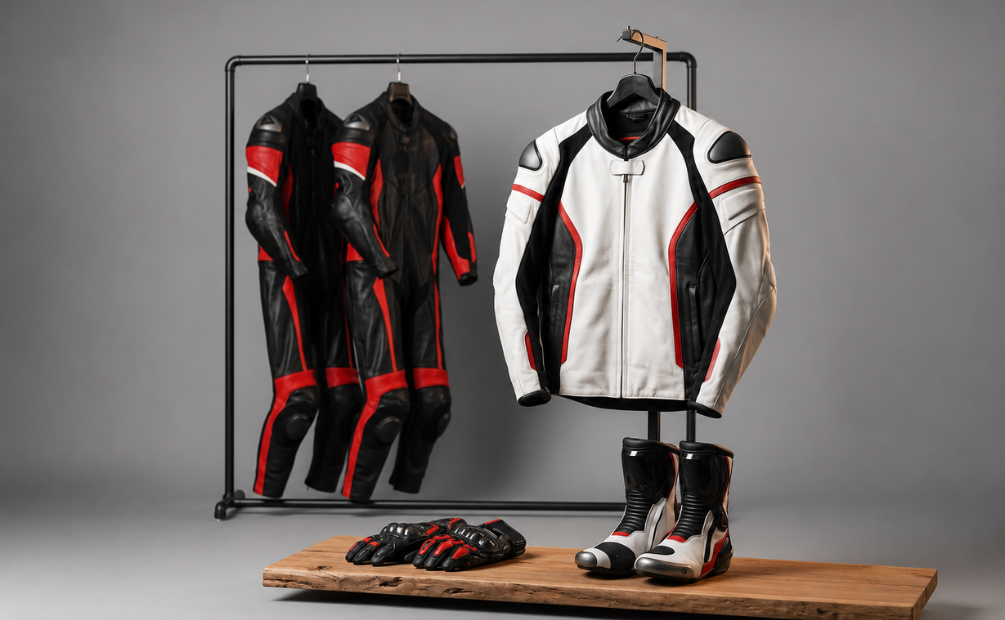
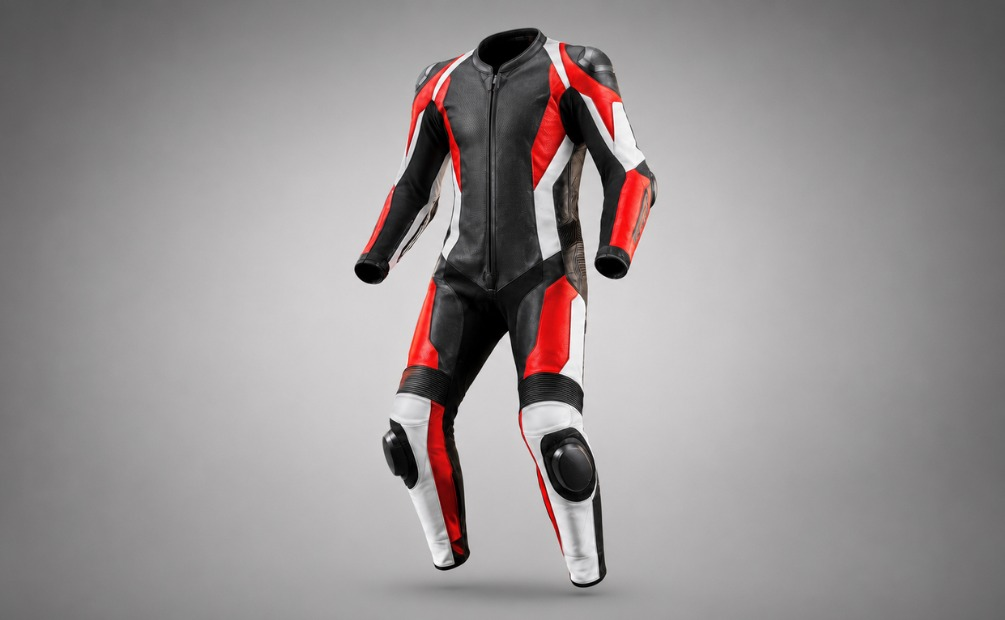
A one-piece motorcycle suit is a single, continuous leather garment, usually with one main zip running from the neck to the waist or groin. It is designed mainly for sport and track riding, where a close, race-oriented fit and continuous coverage are priorities.
How a One-Piece Suit Is Designed
A one-piece leather racing suit is cut with the rider’s body in mind, not a standing posture. The arms are often pre-curved, the knees are bent, and the back is shaped for a tucked position. Because there is no waist join, the leather runs continuously from shoulders to ankles.
01
FIT & FLEXIBILITY
Choose a close, comfortable fit that keeps protective armor correctly positioned while riding.
02
SAFETY CERTIFICATION
Check garment certification, armor standards, stitching quality and manufacturer specifications.
03
CONNECTION ZIP
A full 360-degree zip securely connects the jacket and trousers for better track suitability.
04
PRICE & VALUE
Compare materials, protective features, fit and versatility before choosing your motorcycle suit.
ONE RIDE.
TWO SUIT STYLES.
1-Piece vs. 2-Piece Leather Motorcycle Suits
Choose the right motorcycle suit for your riding style. Compare one-piece and two-piece leather suits for track performance, comfort and everyday riding.
- Protection and performance for sport riding
- Versatile options for different riding styles
- Quality motorcycle suits by TriCore

Key Suit Features
Key Features: Fit, Stretch Panels, Armor and Closures
Most one-piece suits share a few core features:
- Close fit: The suit should feel snug so armor stays in place.
- Stretch panels: Placed at the crotch, back, inner arms and behind the knees to help you move.
- Armor: Shoulder, elbow, hip and knee protectors are common, with a back protector often built in or available as an option.
- Closures: A main front zip, plus zips or Velcro at the wrists and ankles.
- Extras: Many race suits add knee sliders, a speed hump and pockets for an airbag system.
Advantages of a One-Piece Leather Suit
- Continuous construction with no waist join to manage
- Fit that is tailored to a race or sport riding position
- Widely accepted at track days and race events
- A clean, aerodynamic profile at speed
Potential Drawbacks for Everyday Road Riding
The same design that works on track can feel awkward off the bike. Walking around in a suit cut for a crouch can be uncomfortable. Taking breaks, using the restroom or cooling down at a gas station usually means unzipping and peeling off the top half. You also can’t swap pieces for different weather or wear the jacket on its own.
If you mainly ride track days, a one-piece leather motorcycle suit built for a sport riding position is worth a close look.
What Is a 2-Piece Motorcycle Leather Suit?
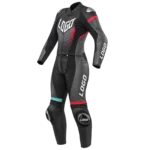
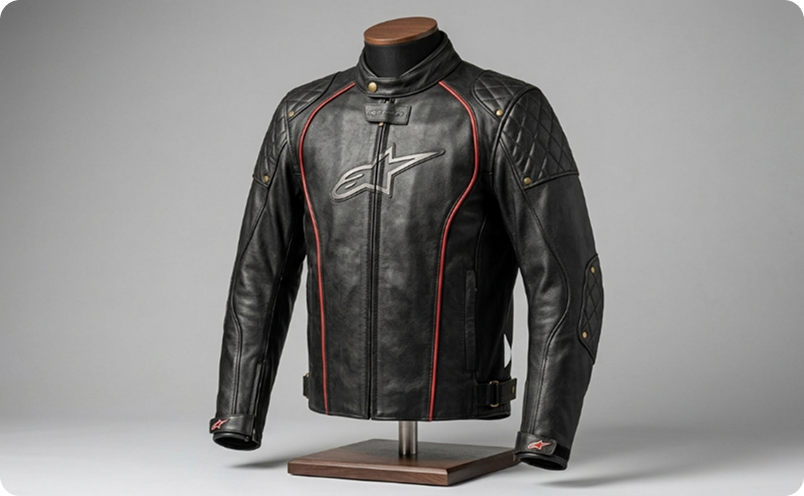
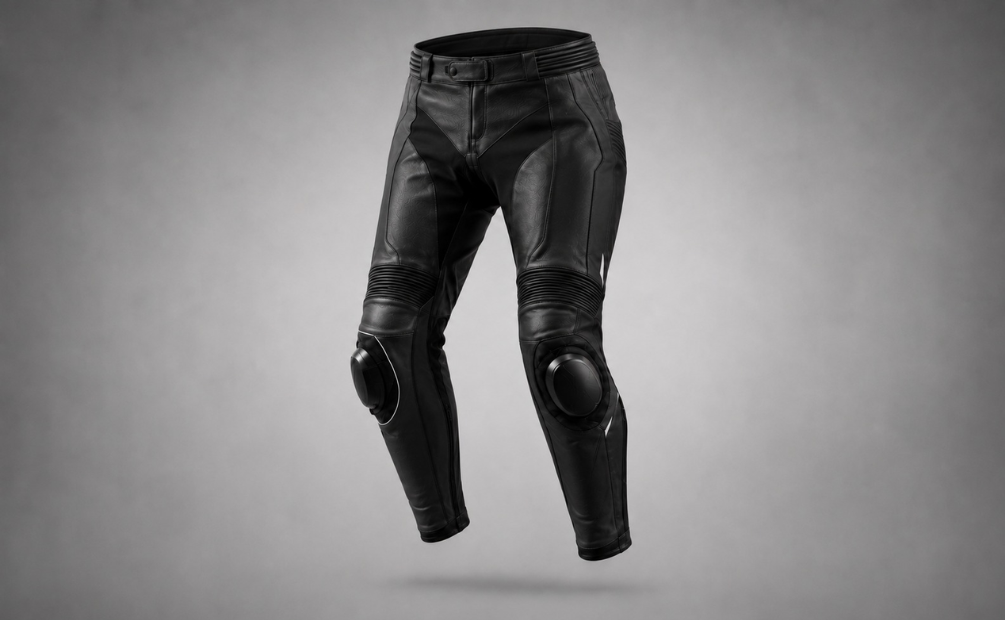
A two-piece motorcycle suit is a leather jacket and matching trousers that zip together at the waist. When the pieces are joined, they work as one outfit. When separated, you can wear each piece on its own.
How the Jacket and Trousers Connect
The jacket and trousers link with a connection zip around the waist. Some suits use a short zip across the back only. Others use a longer or full-circumference zip. The type of connection affects how well the pieces stay together and whether the suit is accepted at certain track events.
What to Know About Waist and 360-Degree Connection Zips
A short connection zip mainly stops the jacket from riding up your back. A 360-degree zip runs all the way around the waist and creates a more complete link between jacket and trousers. Many track organizers that accept two-piece suits ask for a full-circumference zip, so check this detail before buying a two-piece leather racing suit for track use.
IMPACT PROTECTION
Check shoulder, elbow, hip and knee armor for reliable protective coverage.
TRACK DAY SUITABILITY
Check track organizer requirements before choosing a one-piece or two-piece leather suit.
ONE-PIECE ADVANTAGES
Enjoy continuous leather construction, aerodynamic design and a race-focused riding fit.
ROAD RIDING COMFORT
Choose a practical suit that allows comfortable movement during commuting and touring.
TWO-PIECE FLEXIBILITY
Wear the jacket and trousers together or separately for greater everyday convenience.
BEST SUIT CHOICE
Select a one-piece suit for regular track riding or a two-piece suit for everyday road use.
Two-Piece Leather Suit
Advantages of a Two-Piece Leather Suit
- Easier to put on, take off, and move around in
- Jackets and trousers can be worn separately
- Often more comfortable during stops and breaks
- Sizing can be more flexible if your upper and lower body measure differently
Potential Drawbacks for Track Riding
A two-piece suit may not be accepted at every track day or race event. The connection zip also needs to be secure and in good condition. If the jacket and trousers don’t fit well together, gaps or movement around the waist may be more noticeable in a tucked position.
Riders who want flexibility can compare a two-piece leather motorcycle suit with a secure connection system.
1-Piece vs. 2-Piece Leather Suits: Key Differences
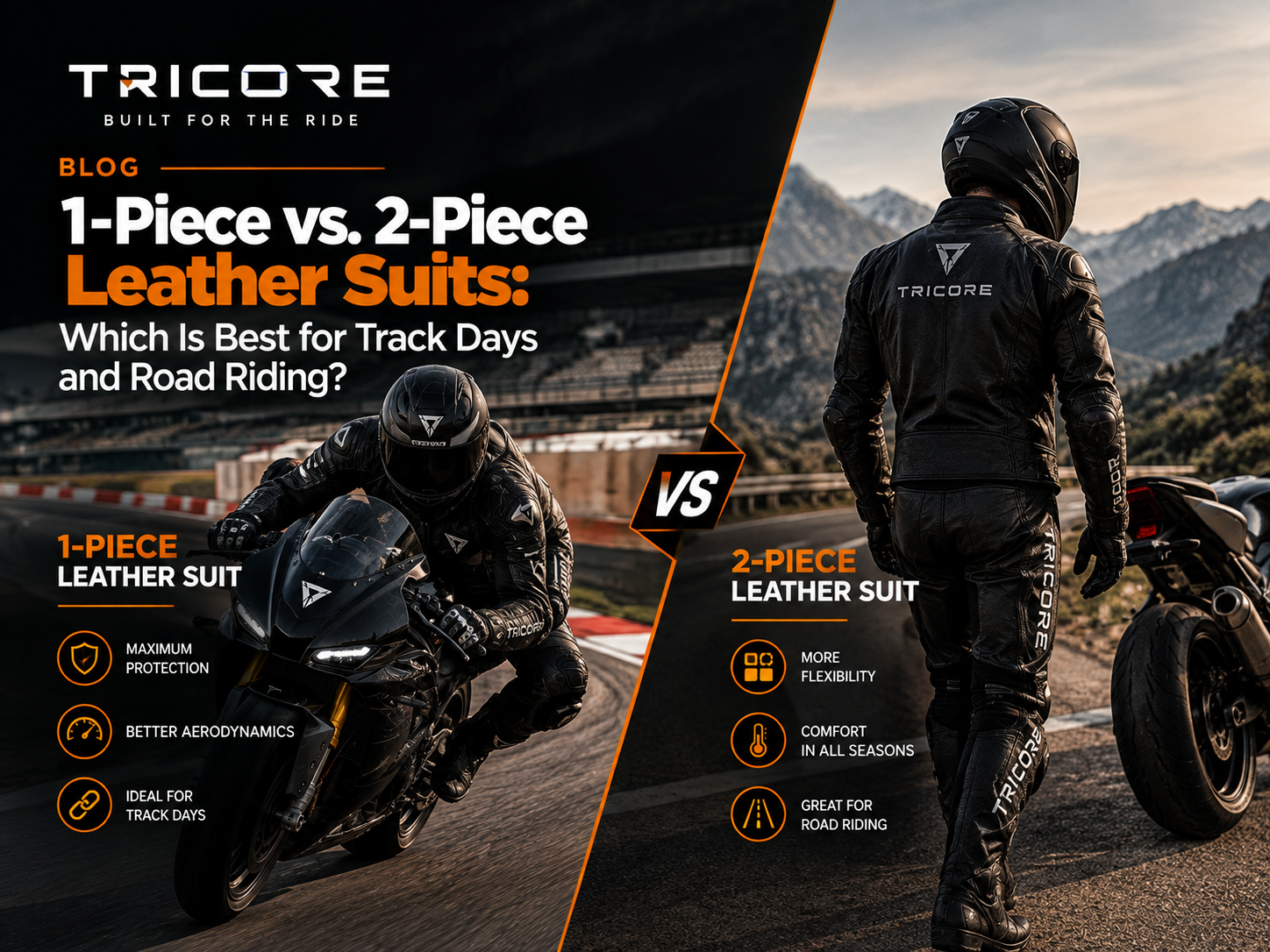
The main difference between a one-piece and two-piece motorcycle suit is construction. A one-piece suit is a single continuous garment built mainly for track and sport riding. A two-piece suit is a jacket and trousers that zip together, offering more flexibility for road riding and everyday use.
This motorcycle suit comparison shows how the two styles typically differ:
Factor | 1-Piece Leather Suit | 2-Piece Leather Suit |
Construction | Single continuous garment | Separate jacket and trousers joined by a zip |
Track-day suitability | Widely accepted at track events | Accepted at some events, often with a full 360-degree zip |
Road-riding practicality | Less convenient for daily use | Often more practical for commuting and touring |
Ease of getting dressed | Takes more effort to put on and remove | Generally quicker and easier |
Comfort off the bike | Can feel restrictive when standing or walking | Easier to walk, sit and take breaks |
Fit and movement | Cut for an aggressive riding position | Fit varies; can suit upright or sport posture |
Protection-related design | No waist join; depends on certification, armor and fit | Depends on connection zip, certification, armor and fit |
Versatility | Mainly sport and track use | Jacket and trousers can be worn separately |
Price and long-term value | Varies by materials and features | Varies; may offer more wear across riding types |
One construction is not automatically safer than the other. Protection depends on the garment’s certification, the leather and stitching quality, the armor, the connection system and, above all, how well the suit fits you.
Best Suit for Track Days
Which Leather Suit Is Best for Weekend Track Days?
For weekend track days, a one-piece suit is the most widely accepted choice. A two-piece suit may also be allowed if it meets the organizer’s rules, which often include a full-circumference connection zip. Requirements vary by circuit, event, and riding group, so always check before you book.
Why Many Track Riders Prefer One-Piece Leathers
A one-piece racing suit is designed for the riding position you use on track. The pre-curved cut, continuous construction, and race-focused features such as knee sliders and speed humps make it a common pick for regular track riders.
When a Two-Piece Suit May Be Suitable
A two-piece suit can work for track days when it has a full 360-degree zip, appropriate protection, and a close fit, and when the organizer accepts it. It can be a sensible choice for riders who do occasional track days but spend most of their time on the road.
Check Track Organizer Requirements Before Booking
Track day leathers’ rules differ widely. Some organizers require one-piece suits. Others accept two-piece suits with a full-circumference zip. Some groups or race events have stricter rules than open track days. Read the event’s clothing policy, and contact the organizer if anything is unclear.
Assess Fit in a Proper Riding Position
Try the suit on while sitting on a bike or in a tucked position. Check that the suit doesn’t pull at the shoulders, that the sleeves cover your wrists, and that the knee armor stays over your knees.
Consider Airbag Compatibility and Protective Features
Some suits are designed to work with specific airbag systems, and some events encourage or require them. Look at the armor type and placement, back protection, and any airbag compatibility listed in the product documentation.
Which Leather Suit Is Best for Everyday Road Riding?
For everyday road riding, a two-piece suit is often the more practical option. It is easier to put on, more comfortable during stops, and more flexible across different rides. Still, the best leather suit for road riding is the one that fits your routine and gives you suitable protective coverage.
Why Two-Piece Suits Can Be More Practical
Two-piece motorcycle leathers let you wear the jacket over regular clothes for short rides, or zip both pieces together for longer trips. That flexibility suits riders who commute, tour, or ride in mixed conditions.
Convenience During Stops and Breaks
Removing a jacket at a café or rest stop takes seconds. With a one-piece suit, you usually have to unzip and tie the top half around your waist. Over a full day of riding, this difference adds up.
Fit, Weather, Ventilation and Riding Duration
Think about how long you ride and in what conditions. Perforated leather and vents can help in warm weather. A slightly more relaxed cut may feel better on long rides, as long as the armor still stays in place.
When a One-Piece Suit Makes Sense on the Road
A one-piece suit can still make sense if you ride a sport bike, enjoy spirited weekend rides, or want the same suit for road and track. If you rarely stop or walk around in your gear, the drawbacks matter less.
Can You Use a Two-Piece Leather Suit for Track Days and Road Riding?
Yes, many riders use one two-piece suit for both, as long as it meets the track event’s requirements. A versatile motorcycle leather suit should have suitable certification, a secure full-circumference zip, appropriate armor, and a close fit in a sport riding position.
Understand the Suit’s Certification and Construction
Check whether the suit has garment certification and what class it holds. Look at the leather type, thickness, and how the high-impact areas are built.
Check Connection Zips and Protective Coverage
A two-piece track day suit usually needs a 360-degree zip. Make sure it is sturdy, easy to close and fully covers the waist area.
Confirm Event-Specific Requirements
Rules can change between circuits and organizers. Confirm the dress code for every event you book.
Balance Everyday Convenience With Track Suitability
Use this quick checklist before buying one suit for both:
- Garment certification is clearly stated
- Full 360-degree connection zip
- CE-certified armor at shoulders, elbows, hips, and knees
- Back protector fitted or available
- Close fit when tucked, comfortable fit when upright
- Accepted by the track organizers you ride with
What Safety Features Should You Look for in Motorcycle Leathers?
Look for certified construction, quality leather, well-placed impact protectors, strong seams, a correct fit, and clear certification details. These features matter more than whether a suit is one piece or two. Always confirm protection details in the product documentation instead of relying on marketing terms.
Leather Quality and Abrasion Resistance
Cowhide and kangaroo leather are common in motorcycle racing leathers. Thickness, tanning, and panel construction all affect how the suit performs when sliding on asphalt.
Impact Protectors and Their Positioning
Armor only helps if it sits where it should. Protectors at the shoulders, elbows, hips, knees, and back should stay in place when you ride and move.
Seams, Stitching, and Reinforced Areas
Look for multiple rows of stitching, hidden seams in high-wear areas, and double layers or reinforcement at the shoulders, elbows, hips, and knees.
Fit, Mobility, and Riding Posture
A protective motorcycle suit must fit closely without blocking movement. Loose suits can let armor shift. Overly tight suits can make it hard to control the bike.
Certification and Airbag Compatibility
A CE-certified motorcycle suit can mean different things. Garment certification (such as EN 17092, with classes ranging from AAA to C) tests the whole garment. Armor certification (such as EN 1621-1 for limb protectors or EN 1621-2 for back protectors) tests only the protectors. A suit may carry CE-certified armor without the garment itself being certified. Check exactly what is certified, and whether the suit is compatible with an airbag system if you plan to use one.
You can compare features and certification details across the TriCore motorcycle leather suit collection.
How Should a Motorcycle Leather Suit Fit?
A motorcycle leather suit should feel snug when standing and comfortable in your riding position, with armor sitting over your joints. It should not pinch, bunch, or ride up when you lean forward. New leather will relax slightly over time, so a firm initial fit is normal.
Check the Fit While Standing and in Riding Position
Standing, the suit may feel tight across the chest and slightly bent at the arms and legs. On a bike, it should feel natural. Your sleeves should cover your wrists and your legs should cover your ankles.
Look for Correct Armor Alignment
Elbow armor should cover the point of the elbow. Knee armor should cover the kneecap when your legs are bent. Shoulder and hip protectors should not slide out of place.
Check Stretch Panels and Movement
Reach for the handlebars, tuck down and move side to side. Stretch panels should let you move without the suit pulling at the neck, back or crotch.
Understand Break-In and Leather Flexibility
Leather softens and molds to your body with wear. A suit that is slightly snug at first often feels better after a few rides. A suit that is painfully tight is likely the wrong size.
When to Consider Custom Sizing
If you fall between sizes, have long limbs or a different upper and lower body shape, motorcycle leather suit sizing off the rack may not work. A custom motorcycle leather suit built from your measurements can help with fit and personalization.
How Much Should You Spend on a Leather Motorcycle Suit?
Motorcycle leather suit price depends on materials, certification, armor, construction, and features, not just whether the suit is one piece or two. Either style can range from entry-level to premium. Compare value based on protection, fit and how you’ll use the suit.
What Affects the Price of a One-Piece Suit?
Leather type, certification class, armor quality, airbag compatibility, race features and custom sizing all affect cost.
What Affects the Price of a Two-Piece Suit?
The same factors apply, plus the type of connection zip and whether the jacket and trousers are sold together or separately.
Compare Features, Fit and Certification, Not Just Price
An affordable motorcycle racing suit can be a smart buy if it is properly certified and fits well. An expensive suit that fits badly may give you less value.
Consider the Cost of Buying Separate Gear
If you need a road jacket and a track suit, one versatile two-piece suit may cover both. If you mainly ride track, a dedicated one-piece suit may be the better long-term investment.
How to Choose the Right Suit for Your Riding Style
Choose a one-piece suit if you mainly ride track days. Choose a two-piece suit if you mainly ride on the road. If you do both, pick a two-piece suit with a full 360-degree zip that meets your track’s rules. Use this quick guide:
- Weekend track days: Prioritize event compliance, a race-oriented fit and track-appropriate protection.
- Everyday road riding: Prioritize fit, convenience and suitable protective coverage.
- Both track and road: Look for a versatile design that meets the requirements of both.
- Custom fit needs: Consider measurement-based sizing that matches your intended use.
Final Verdict: 1-Piece or 2-Piece Leather Suit?
The 1-piece vs. 2-piece leather suit decision comes down to how and where you ride. One-piece suits offer continuous construction and a race-focused fit that many track riders prefer. Two-piece suits offer flexibility, comfort off the bike, and everyday practicality.
Neither is automatically safer. The best motorcycle leather suit for you is one with clear certification, quality construction, correctly placed armor, and a fit that works in your riding position. If you ride track days, confirm the organizer’s rules first. Then compare suitable one-piece and two-piece options side by side before you buy.
Leather Motorcycle Suits
Frequently Asked Questions (FAQ)
1.What is the difference between a one-piece and two-piece motorcycle suit?
A one-piece motorcycle suit is a single continuous garment covering the torso, arms and legs. A two-piece suit is a separate jacket and trousers joined by a connection zip. One-piece suits are typically designed for track and sport riding, while two-piece suits offer more flexibility for road riding, stops and everyday use.
2.Can you wear a two-piece leather suit on a track day?
Many track days accept two-piece leather suits, but often only if the jacket and trousers connect with a full 360-degree zip. Some events or riding groups require one-piece suits. Always check your track organizer’s clothing requirements before booking so you know your suit will be accepted.
3.Is a two-piece motorcycle suit better for road riding?
A two-piece motorcycle suit is often more practical for road riding. It is easier to put on and take off, more comfortable during breaks, and the jacket and trousers can be worn separately. Still, the right choice depends on your riding style, fit preferences and the level of protection you need.
4.Are one-piece motorcycle suits safer than two-piece suits?
Not automatically. Protection depends on garment certification, leather quality, stitching, armor, the connection system and fit. A one-piece suit has no waist join, while a two-piece suit with a secure full-circumference zip and good fit can also provide strong coverage. Check the product’s certification documents rather than assuming one style is safer.
5.How should a leather motorcycle suit fit?
A leather motorcycle suit should feel snug when standing and comfortable in your riding position. Armor should sit over your joints and stay in place as you move. Sleeves should cover your wrists and legs should cover your ankles. New leather softens over time, so a firm fit at first is normal.