How to Layer Under a Leather Motorcycle Jacket in Winter (and Choose Warm, Windproof Gloves)
Winter Riding Layers
How to Layer Under a Leather Motorcycle Jacket in Winter (and Choose Warm, Windproof Gloves)
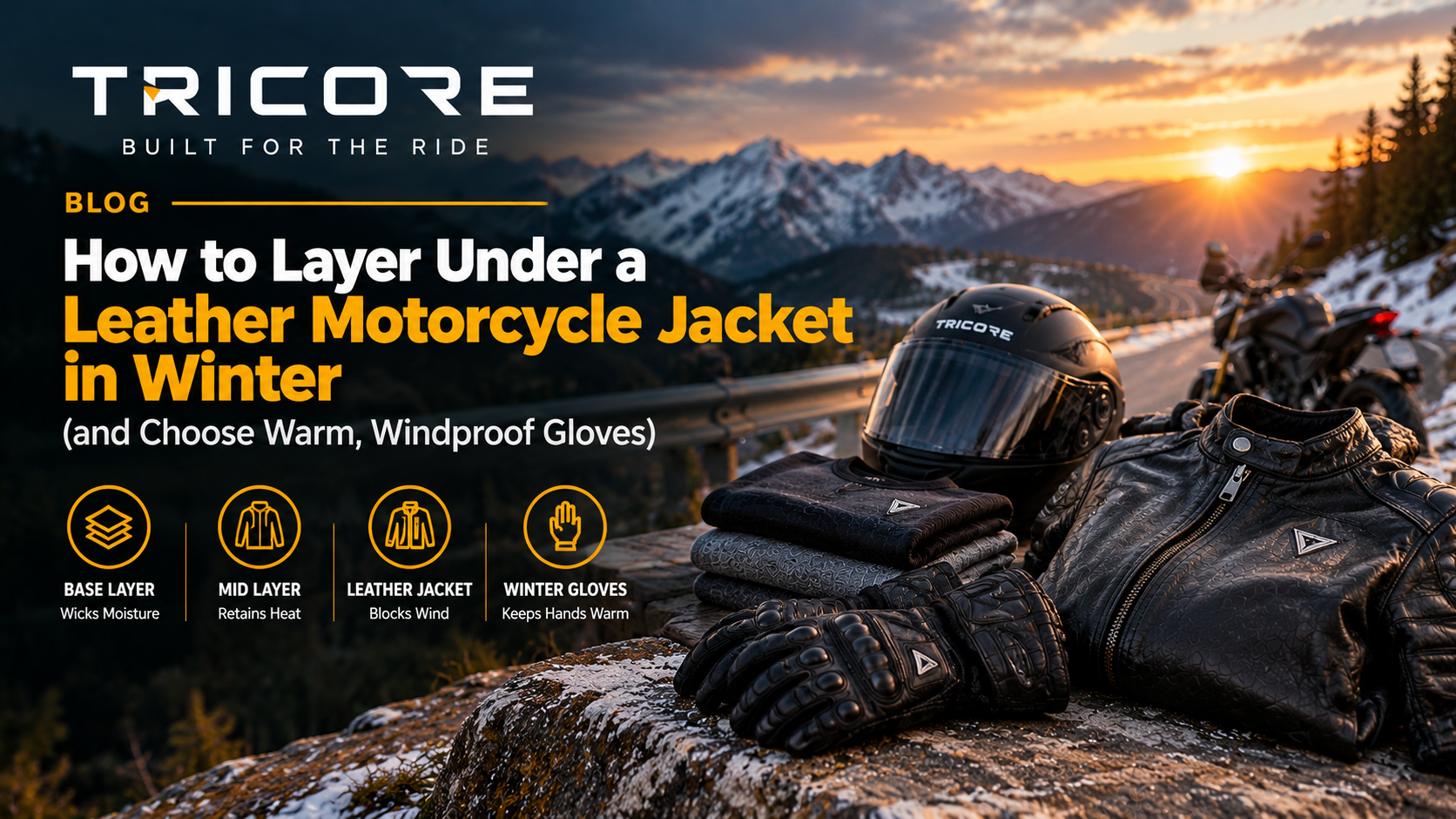
TL; DR Twenty minutes into a winter ride, cold starts to affect how you ride. Your fingers go numb on the levers, your shoulders tense, and your reactions slow. That’s why learning how to layer under a leather motorcycle jacket matters for safety as much as comfort. Cold hands and a cold core reduce control, and control is what keeps you upright.
This guide explains what to wear under a motorcycle jacket in winter, what to avoid, how to keep your armor working, and how to choose gloves that keep your hands warm and responsive. It works with any of TriCore’s leather motorcycle jackets. For gear advice across the whole year, see our guide to the right clothing for every UK season.
Key Takeaways
- Leather blocks wind but doesn’t insulate. You need warm layers underneath.
- Use three layers: a moisture-wicking base, a thin insulating mid-layer, and your leather jacket with CE Level 2 armor as the outer layer.
- Skip cotton, hoodies, and puffers. They trap sweat, add bulk, and shift your armor.
- Choose winter motorcycle gloves that are snug but not tight, with a gauntlet cuff and EN 13594 certification.
- Heated grips or heated gloves are the most effective fix for cold hands on long rides.
Table of Contents
Why Winter Riding Feels Colder Than the Forecast
The 3-Layer System: How to Layer Under a Leather Motorcycle Jacket
What Not to Wear Under a Leather Motorcycle Jacket
Keeping Armour in the Right Place With Extra Layers: Don’t Forget Your Neck, Legs, and Feet How to Choose Thermal, Windproof Motorcycle Gloves Winter Riding Checklist Winter Safety Beyond Clothing FAQs Conclusion
01
Why Layering Matters
Proper winter layering keeps your body warm, comfortable and ready for safer riding.
02
Choose a Base Layer
Wear merino wool or synthetic thermal clothing to wick moisture away from your skin.
03
Add a Mid Layer
Use a thin fleece or insulated vest to retain warmth without adding excess bulk.
04
Wear a Leather Jacket
A well-fitted leather motorcycle jacket helps block wind and provides abrasion protection.
WINTER RIDING
MADE WARMER.
Learn how to layer under a leather motorcycle jacket and choose warm, protective winter riding gear.
Stay Warm on Every Ride
Start with a moisture-wicking base layer, add a thin insulating mid layer, and wear your leather jacket over both. Choose snug thermal motorcycle gloves, keep your protective armour correctly positioned, and avoid bulky clothing that restricts movement.
BUILT FOR THE RIDE.

Premium Men's Leather Jackets
Timeless style. Ride-ready attitude.
EXPLORE COLLECTION ↗Why Winter Feels Colder
Why Winter Riding Feels Colder Than the Forecast
Wind chill at riding speed makes the air feel far colder than the thermometer says. At 41°F (5°C), riding at 60 mph (about 97 km/h) feels close to 27°F (-3°C) on any exposed skin. Moving air strips heat from your body much faster than still air does.
Leather is great at stopping wind. Thick cowhide also gives excellent abrasion resistance. But leather isn’t insulation. It has no loft to trap warm air, so a leather jacket over a T-shirt cuts the wind and still leaves you cold.
The fix is simple: let the leather handle wind and protection, and let the layers underneath handle warmth.
The 3-Layer System: How to Layer Under a Leather Motorcycle Jacket
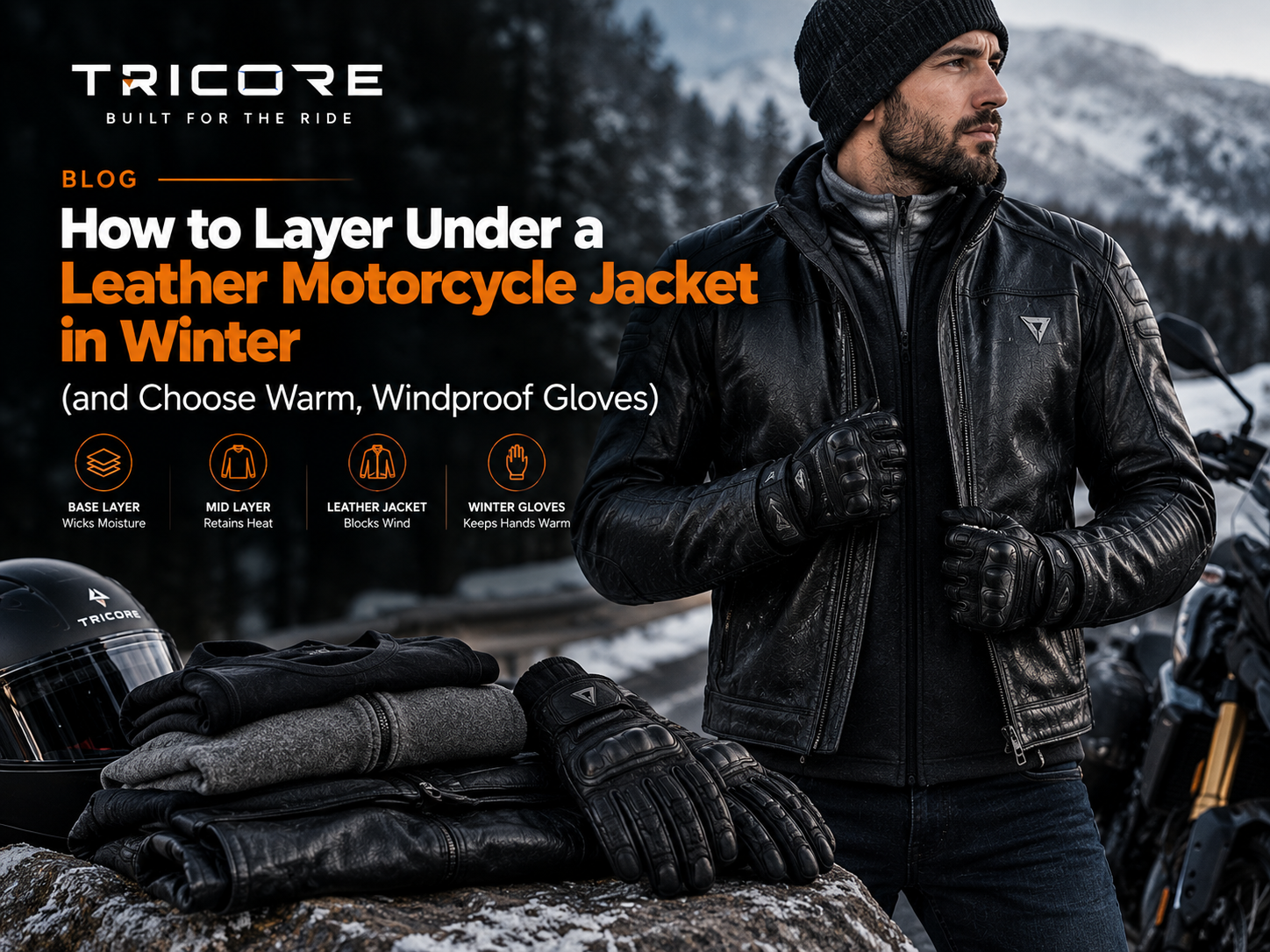
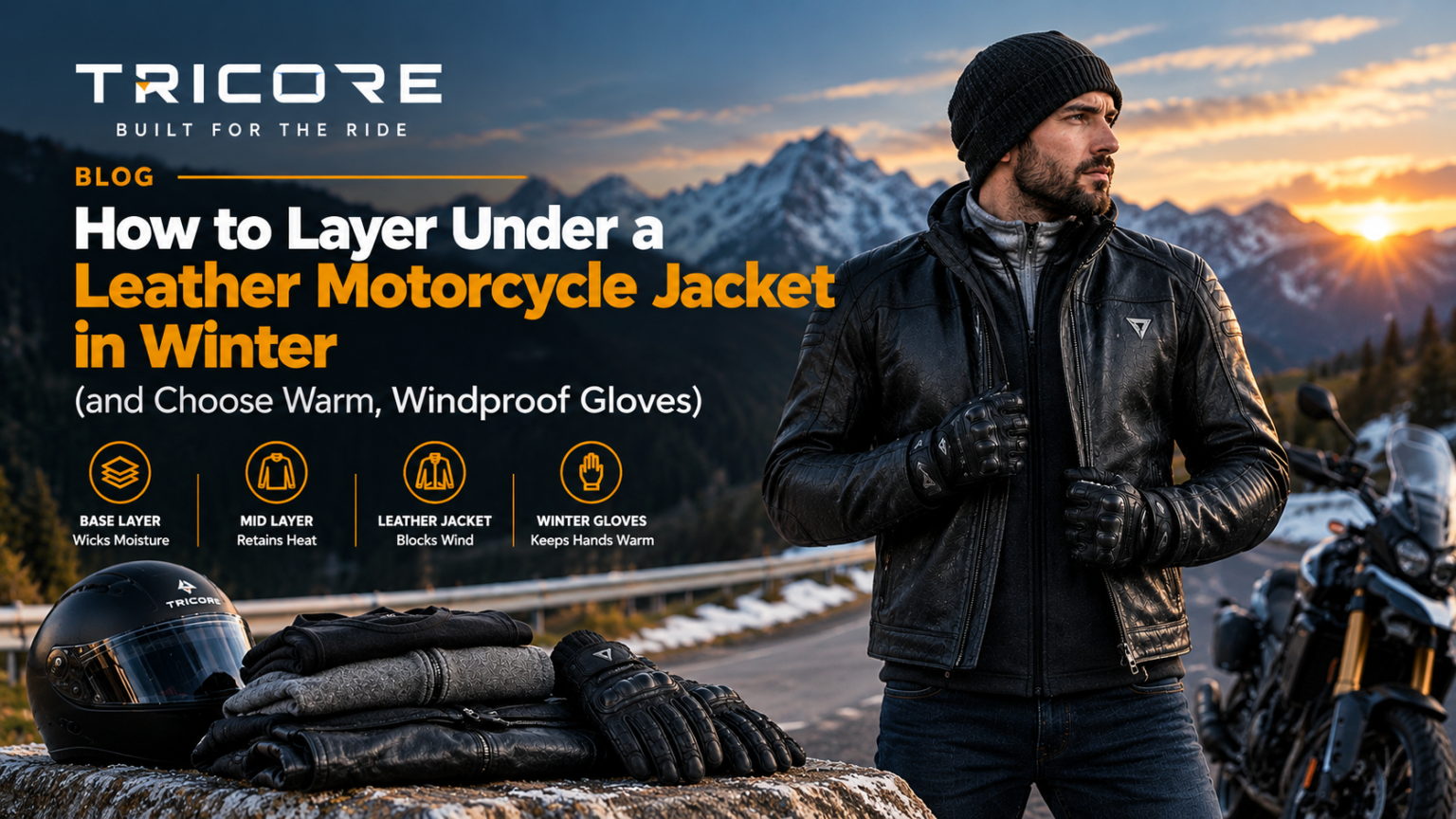
Here’s the quick answer. Layer from the skin out:
- Base layer: a moisture-wicking merino wool or synthetic thermal top
- Mid layer: a thin fleece, light insulated vest, or windproof liner
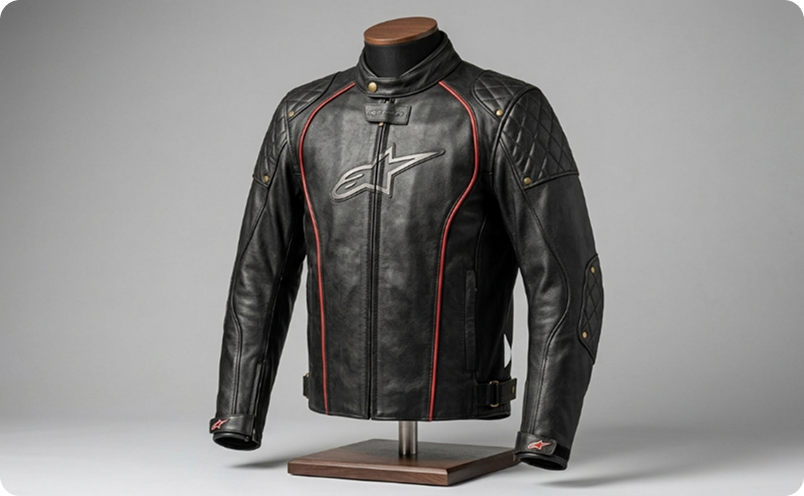
- Outer layer: your leather jacket, zipped and adjusted, with CE Level 2 armour in place
Each layer has one job. Together they trap heat, move sweat away, and protect you if you fall.
Avoid Bulky Clothing
Thick hoodies and oversized layers can affect comfort and move protective armour out of position.
Choose Thermal Gloves
Insulated winter motorcycle gloves help keep your fingers warm in cold riding conditions.
Keep Armour in Place
Check shoulder and elbow armour while sitting in your normal riding position.
Check Glove Fit
Choose snug gloves with enough room for finger movement and a long cuff to reduce cold drafts.
Protect Your Neck and Legs
Wear a neck gaiter, thermal base layers and suitable riding trousers to reduce heat loss.
Prioritise Riding Safety
Choose protective motorcycle gear with appropriate safety certification, and consider heated grips for extra warmth.
Base Layer Choice
Base Layer: Merino or Synthetic, Never Cotton
Your base layer sits against your skin and manages moisture. Even in winter, you sweat, especially in traffic. If that sweat stays on your skin, it chills you fast once you pick up speed.
The best base layer for winter motorcycle riding is merino wool or a synthetic thermal. Merino stays warm when damp and resists odor, which is useful on multi-day trips. Synthetics dry faster and usually cost less. Choose a close fit with long sleeves and a slightly longer back so it stays tucked in when you lean forward.
Mid Layer: Thin Fleece, Insulated Vest, or Windproof Liner
The mid-layer adds warmth by trapping air. Thin is better than thick here. A 100-weight fleece, a light insulated vest, or a dedicated thermal liner gives real warmth without crowding your jacket.
Vests work especially well because they keep your core warm without bulking up your arms, so your elbow armor stays where it should be. If you’re wondering how to wear a thermal liner under a leather biker jacket, zip it fully, tuck it into your waistband, and make sure the sleeves don’t bunch at the wrists.
Outer Layer: The Jacket, With CE Level 2 Armour in Place
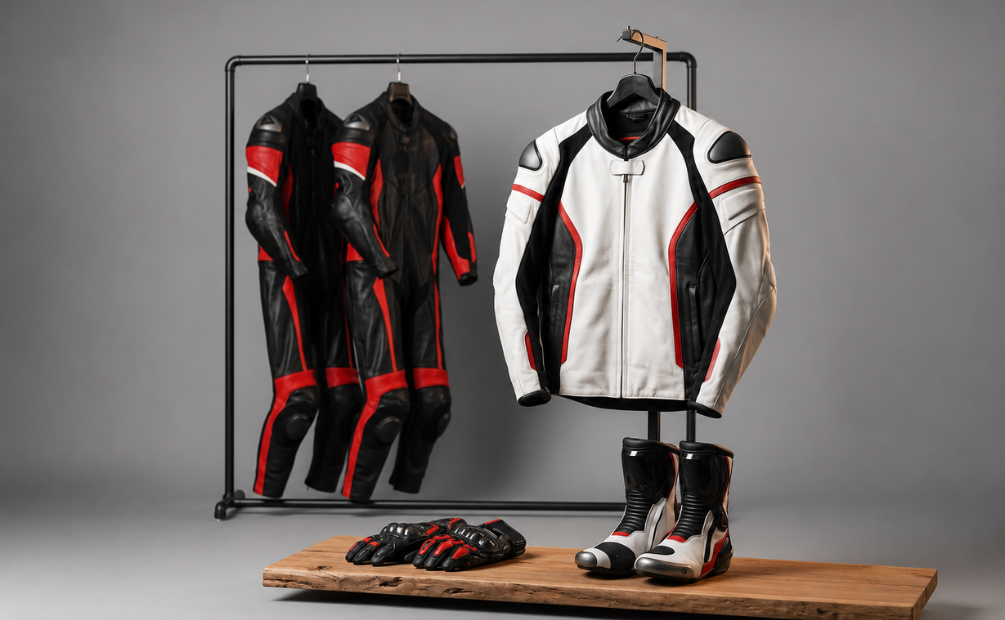
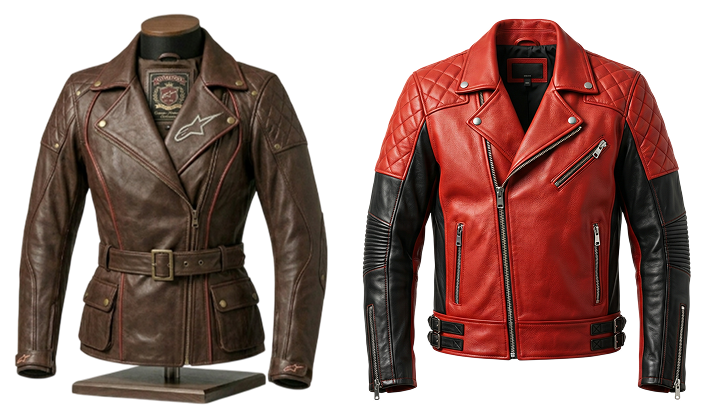
Your leather jacket is the shell. It blocks wind, resists abrasion, and holds your armor against your shoulders, elbows, and back. Choose a jacket certified to EN 17092, the European standard for protective motorcycle garments, with CE Level 2 armor for the highest impact protection.
If you’re comparing leather vs. textile for cold weather, textile often comes with built-in liners and waterproofing, while leather offers better abrasion resistance and a closer fit. Either way, the jacket only protects you if it fits properly over your layers. Read more on why every rider needs a real jacket.
Shop the layer: Browse TriCore leather motorcycle jackets built with room for a base and mid layer.
What to Avoid Wearing
What Not to Wear Under a Leather Motorcycle Jacket
Common mistake: piling on whatever’s warm in the closet. Some layers work against you:
- Bulky hoodies: The thick body and hood push armor out of position and bunch at your neck. A thin, close-fitting hoodie on short rides is fine, but it’s not a real winter layer.
- Puffer jackets: Compressed down, they lose their warmth, and the bulk keeps armor off your joints.
- Cotton: Anything cotton absorbs sweat and holds it. Wet cotton pulls heat from your body fast.
- Loose layers: Anything baggy bunches at the elbows and waist, causing pressure points and armor drift.
Bottom line: thin, fitted, and technical beats thick and loose every time.
Keeping Armour in the Right Place With Extra Layers
Armour placement matters more than armour quality. CE Level 2 armor that has slid two inches off your elbow won’t protect the joint in a crash.
Here’s how to keep it in place:
- Try your jacket on with your full winter layers. Sit on your bike in a riding position and reach for the bars. Check that shoulder and elbow pads still cover the joints.
- Use every adjuster. Waist, arm, and collar straps keep the jacket snug so armor stays put.
- Avoid sizing up too far. Going up one size can help, but a jacket that’s loose in summer lets armor move in a crash.
Riders who use the same jacket all year often get the best results from a custom-fit jacket cut to your measurements with room for a base and mid-layer built in. For more on what the rating means, see this explainer on CE Level 2 armor.
Don’t Forget Your Neck, Legs, and Feet
A warm torso won’t help much if cold air pours in at your collar or your legs go stiff.
- Neck: A neck gaiter or balaclava seals the gap between helmet and jacket. A balaclava also stops drafts inside your helmet.
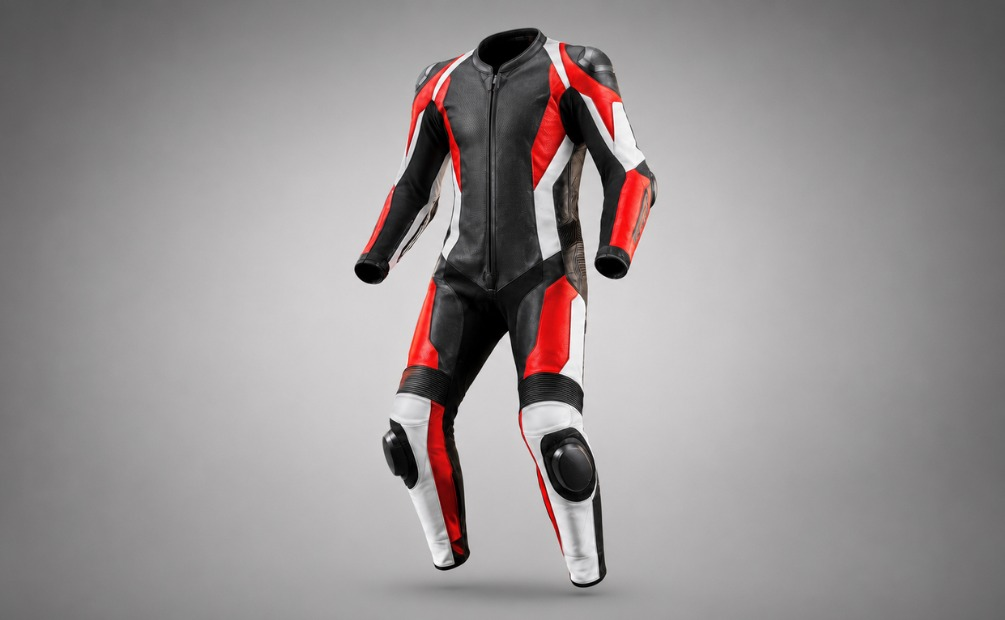
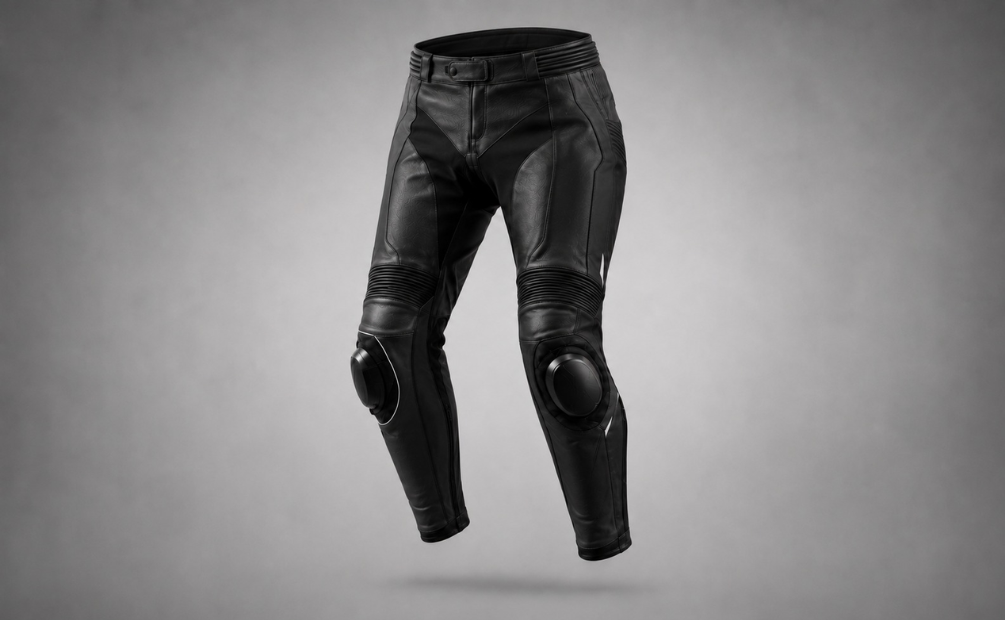
- Legs: Wear a thermal base layer under your motorcycle pants or one-piece suit. Your thighs take the full force of the wind.
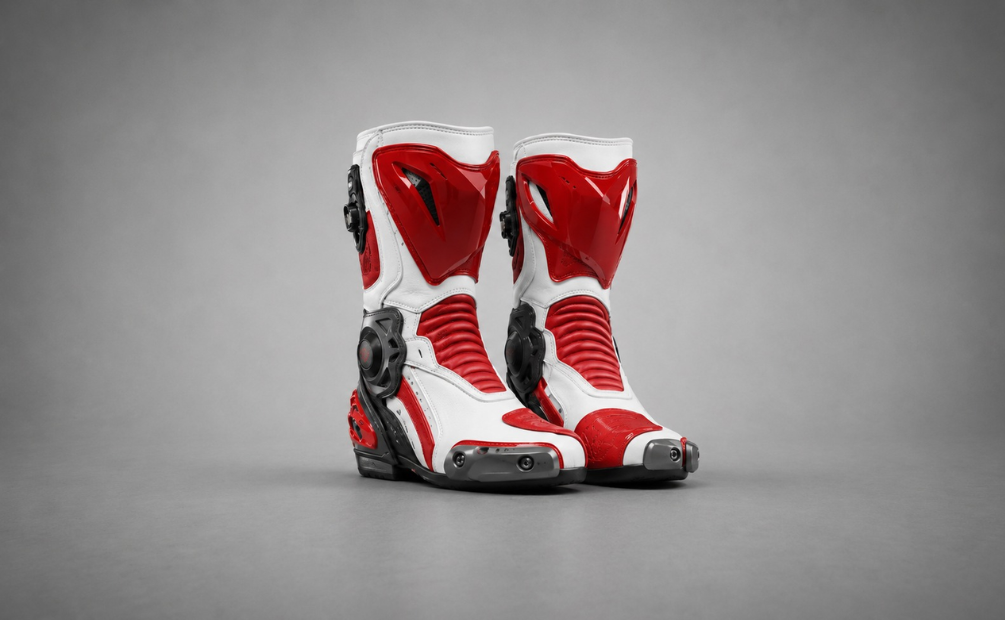
- Feet: Choose merino winter socks and insulated, waterproof riding boots. Make sure thick socks don’t squeeze your toes, since tight boots cut circulation just like tight gloves.
How to Choose Thermal, Windproof Motorcycle Gloves
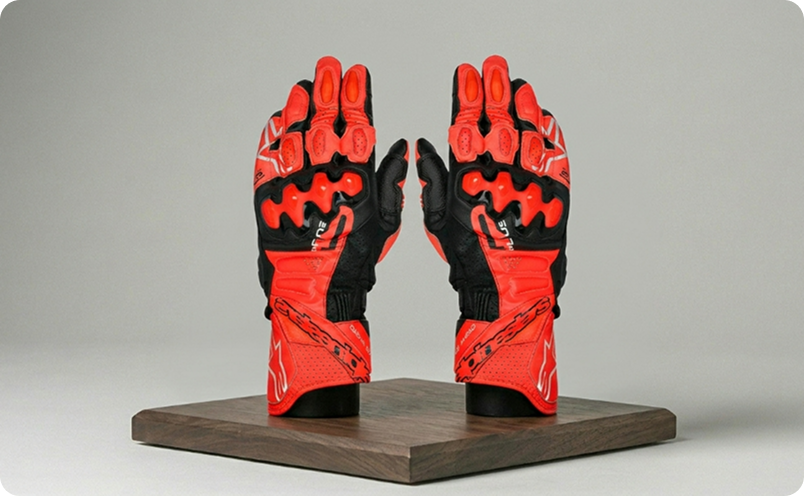
Hands get colder than any other part of your body on a bike. They sit directly in the airflow and grip metal bars. Good winter motorcycle gloves keep your fingers warm enough to brake and steer with precision. TriCore’s range of motorcycle gloves includes men’s gloves and women’s gloves, but whatever brand you choose, look for these features.
Thermal vs Windproof vs Waterproof Motorcycle Gloves
These labels describe different things. Many riders need gloves that combine all three.
Feature | What it does | What it doesn’t do | Best for |
Thermal | Insulation traps warm air around your fingers | Doesn’t stop wind or rain on its own | Dry, cold days |
Windproof | A membrane or tight leather blocks airflow | Doesn’t add insulation | Fast riding, cold commutes |
Waterproof | A waterproof membrane keeps rain out | May reduce breathability and cause condensation inside | Wet winter riding |
Windproof motorcycle gloves with thermal lining handle most dry winter days. For rain, add a waterproof membrane.
Fit and Cuff Length
How tight should winter motorcycle gloves be? Snug, but not tight. Tight gloves restrict circulation, and poor blood flow makes fingers go numb faster than cold air does. You should be able to make a full fist with a small gap of air at the fingertips.
Cuff length matters too. A long gauntlet cuff that closes over your jacket sleeve stops cold air from rushing up your arms and keeps rain from running into the glove.
Protection First: CE Certification and EN 13594
Warmth never replaces protection. Look for gloves certified to EN 13594, the European standard for motorcycle gloves. Then check for:
- Hard or padded knuckle protection
- A palm slider to reduce grip and twisting in a slide
- Reinforced leather on the palm and outer hand
CE approved winter motorcycle gloves and dedicated protection gloves give you insulation without giving up crash safety.
Dexterity: Test Lever Feel and Braking
Thick insulation can dull your lever feel. Before buying, sit on a bike if you can. Cover the front brake and clutch, operate the switches, and twist the throttle. If you can’t feel the bite point of the clutch, the glove is too bulky for your riding.
Liners and Heated Options
Do you need heated gloves for motorcycle riding? Not always, but they help a lot on long or very cold rides.
- Liner gloves: Thin merino or silk inner gloves add warmth with little bulk. They only work if your outer gloves have room.
- Heated grips: They warm your palms directly and work with any glove.
- Heated gloves: They warm the fingers, where cold hands start. They’re ideal for commuters riding below freezing.
Winter Riding Checklist
Use this quick list before every cold ride. For a full kit list, see our UK rider’s guide to gear.
- Merino or synthetic base layer (top and bottom)
- Thin fleece, insulated vest, or thermal liner
- Leather jacket with CE Level 2 armor, adjusters tightened
- Neck gaiter or balaclava
- Windproof, thermal gloves with gauntlet cuff and EN 13594 rating
- Liner gloves or heated grips for longer rides
- Merino socks and insulated, waterproof boots
- Pinlock or anti-fog visor insert
Winter Safety Beyond Clothing
Gear is only part of winter riding. Keep these in mind:
- Cold tires: They take longer to warm up and grip less. Ride gently for the first few miles.
- Shorter daylight: Wear high-visibility layers or reflective details, and check your lights.
- Ice and frost: Watch shaded corners, bridges, and early mornings. If roads look glazed, stay home.
How to check motorcycle gear fit in a riding position
A standing fit check only tells part of the story. Gear needs to be assessed in both standing and seated positions to confirm it performs correctly once you’re actually riding.
How to check a motorcycle jacket while seated
Sit in your normal riding posture, reach forward as though gripping the handlebars, and check whether the jacket rides up at the back or restricts shoulder movement. The sleeves should stay in place and the torso should remain covered throughout the movement.
How to check trouser length on a motorcycle
While seated with your feet on the pegs or footboards, check whether the trouser hem stays in contact with your boots or rides up to expose skin. Knee armor should remain aligned with your kneecap in this seated position, not just when standing.
What are common signs that motorcycle gear does not fit correctly?
Common signs include armor shifting out of position during movement, sleeves or trouser legs riding up when seated, restricted movement when reaching for controls, visible gaps at the waist or wrists, and excessive bunching of fabric at the joints.
Important: A fit check is a useful step, but it isn’t a substitute for certification, inspection, or the manufacturer’s own safety guidance. Correct sizing supports protective performance—it doesn’t guarantee it on its own.
Common motorcycle gear sizing mistakes and how to avoid them
The best way to avoid sizing mistakes is to take accurate measurements, use the correct product-specific chart, and verify fit in the intended riding position before finalising a purchase.
The most frequent sizing errors include:
- Choosing the same size as casual clothing without checking actual measurements
- Measuring over bulky clothing when the instructions specify otherwise
- Pulling the measuring tape too tight, or leaving it too loose
- Mixing inches and centimetres when comparing to a chart
- Using one brand’s size chart to estimate sizing for a different brand
- Ignoring riding posture and the position of protective components
- Guessing between sizes rather than following product-specific between-size guidance
- Submitting incomplete or inconsistent measurements when ordering custom gear
Avoiding these mistakes comes down to one habit: treating every purchase as its own measurement exercise, rather than assuming consistency across brands or garment types.
Motorcycle Gear Sizing
Frequently Asked Questions (FAQ)
1.What should I wear under a leather motorcycle jacket in winter?
Wear a moisture-wicking merino or synthetic base layer, then a thin fleece, insulated vest, or thermal liner as your mid layer. Your leather jacket works as the windproof outer layer. This three-layer system traps heat, moves sweat away from your skin, and keeps your CE Level 2 armour in the right place. Avoid cotton, which holds sweat, and keep each layer thin and fitted.
2.Can I wear a hoodie under a leather motorcycle jacket?
You can wear a thin, close-fitting hoodie on short rides, but it’s not ideal for winter. Thick hoodies bunch at the neck and arms, push armour out of position, and often contain cotton that holds sweat. A thin fleece or insulated vest gives more warmth with less bulk and better protection.
3.Are leather motorcycle gloves warm enough for winter?
Standard summer leather gloves usually aren’t warm enough for winter. Leather blocks wind well, but it doesn’t insulate on its own. For cold weather, choose leather gloves with a thermal lining, a windproof or waterproof membrane, and a long gauntlet cuff. Adding thin liner gloves or heated grips helps even more.
4.How do I keep my hands warm on a motorbike?
Wear insulated, windproof winter motorcycle gloves that fit snugly without squeezing your fingers. Tight gloves restrict circulation, which makes hands colder. Close the gauntlet cuff over your jacket sleeve to block drafts. For long or freezing rides, heated grips, heated gloves, or handguards make the biggest difference to warmth. Keeping your core warm also helps, since your body sends more blood to your hands when your torso isn’t cold.
5.Can you ride a motorcycle in a leather jacket in cold weather?
Yes, you can ride in a leather jacket in cold weather if you layer properly underneath. Leather blocks wind and offers excellent abrasion resistance, but it doesn’t insulate. Add a merino or synthetic base layer and a thin insulating mid layer, then seal your neck, wrists, and waist against drafts.