Sheepskin vs Cowhide Leather Jacket: Which Is Warmer?
Sheepskin vs Cowhide
Sheepskin vs. Cowhide Leather Jacket: Which Is Warmer?
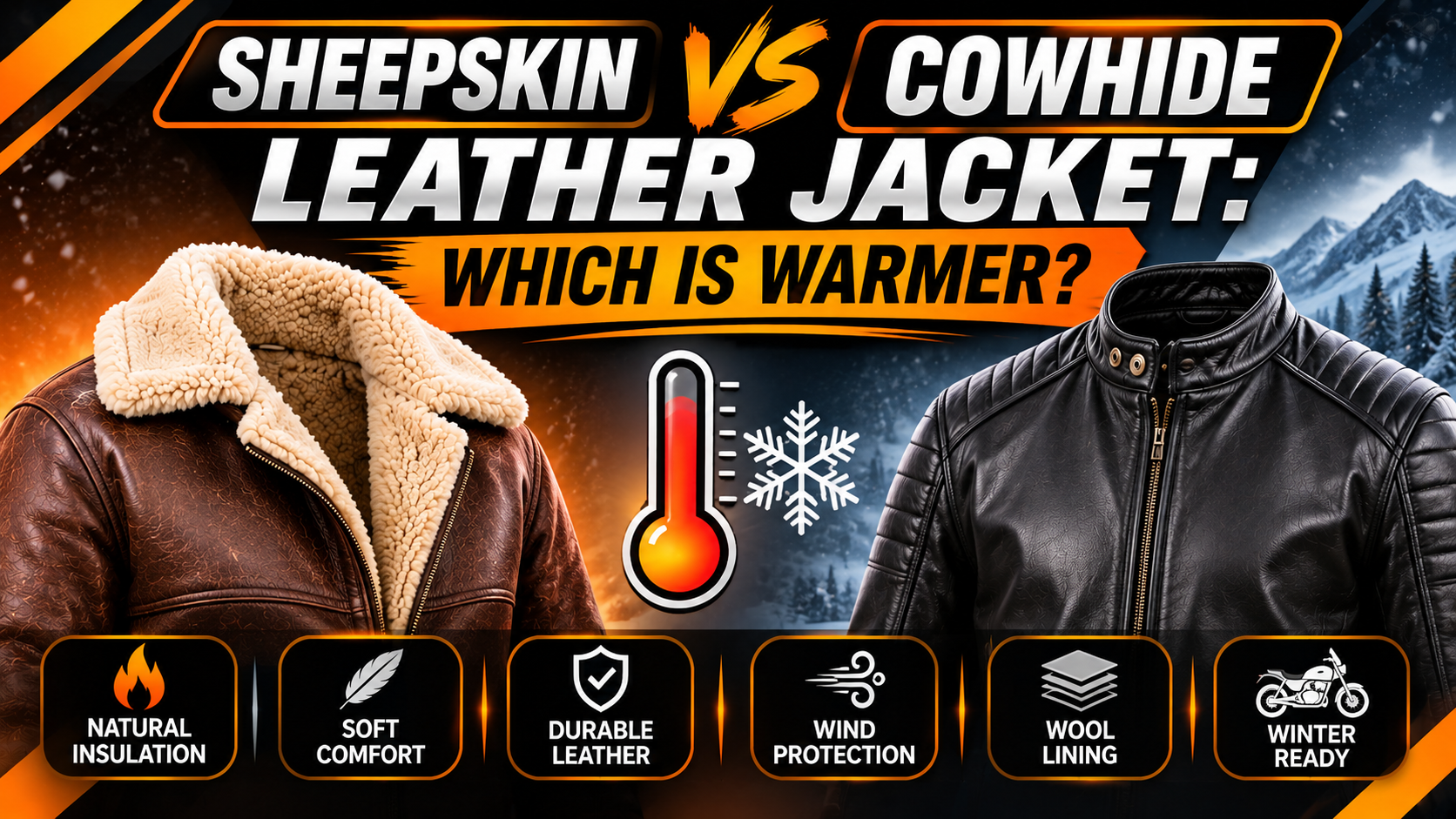
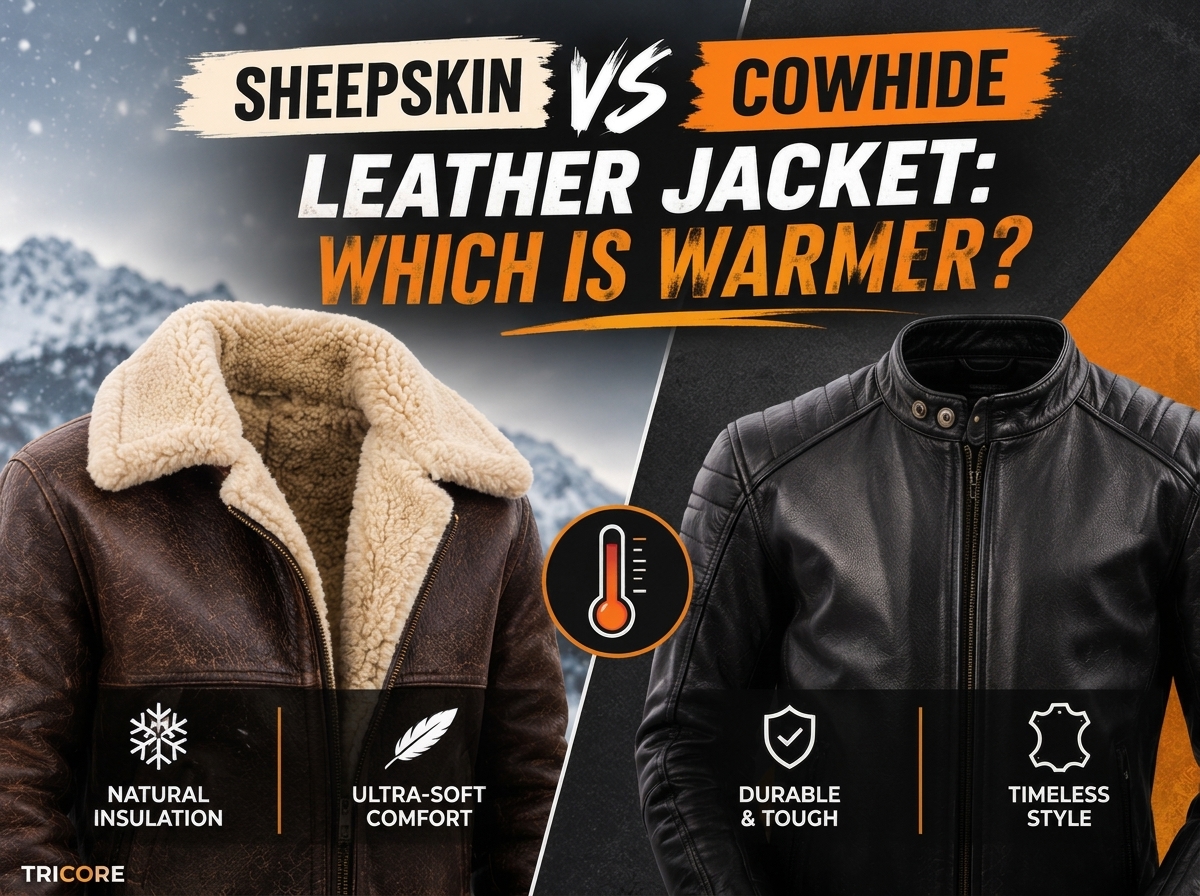
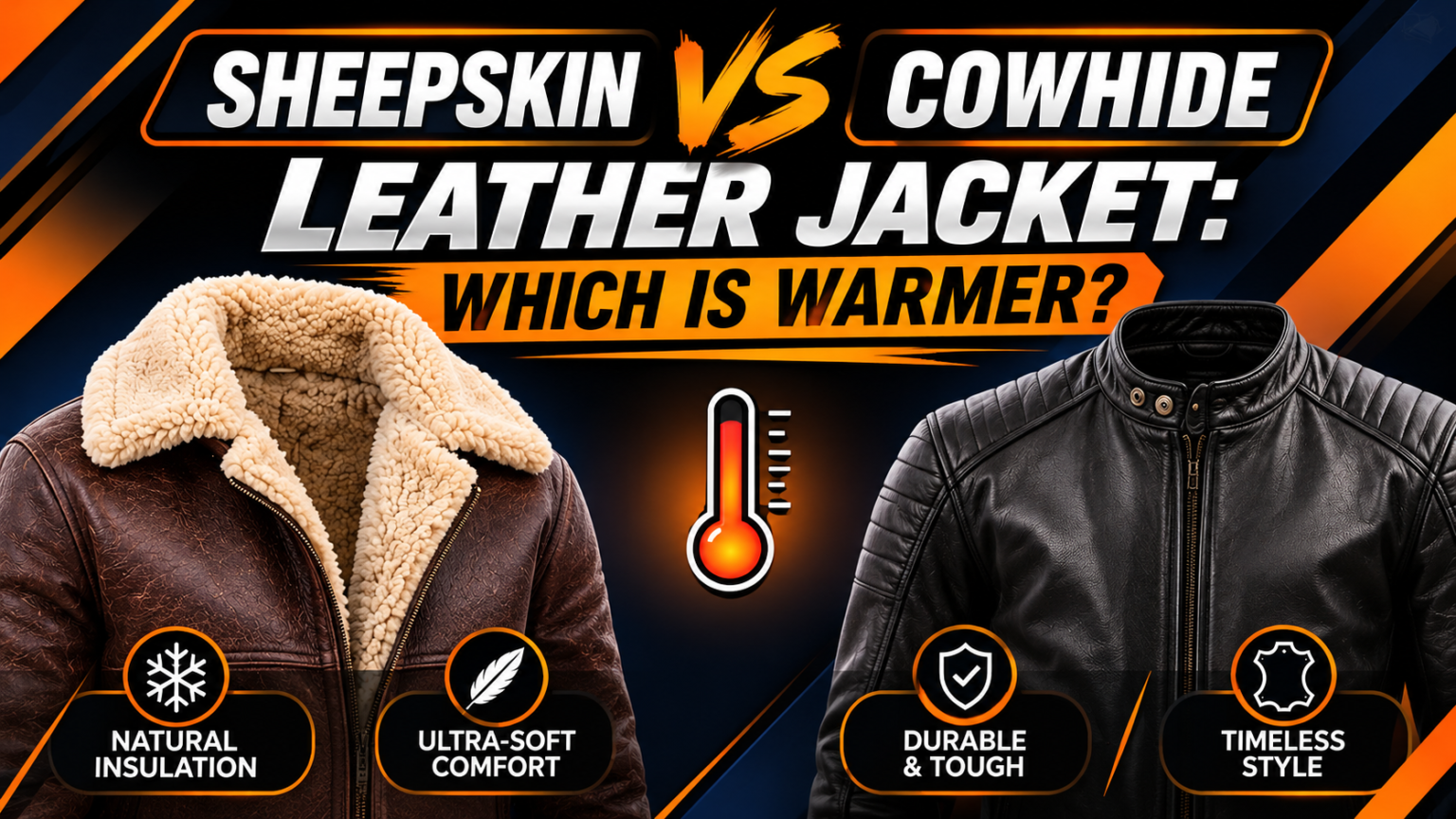
Quick answer: Shearling (wool-lined sheepskin) is generally the warmest leather jacket option because it retains natural wool insulation against the skin. Plain sheepskin leather feels softer and lighter, while cowhide leather is more durable and wind-resistant but relies on its lining for warmth. The best choice depends on whether you prioritize natural insulation, everyday durability, or motorcycle-grade protection.
Winter weather doesn’t forgive a poor jacket choice. Cold wind cuts through thin leather, damp air stiffens an unlined hide, and the wrong fit leaves gaps where heat escapes. Before buying a new leather jacket for the colder months, it helps to understand what the hide is actually made from and how that material behaves once temperatures drop.
Sheepskin and cowhide are the two leather types shoppers compare most often. Sheepskin leather jackets are prized for their soft texture and lightweight feel, while cowhide leather jackets are known for toughness and structure. But “warmer” isn’t as simple as picking one hide over the other. Warmth depends on fiber density, wool retention, lining, and construction just as much as the leather itself.
This guide breaks down sheepskin vs cowhide leather jacket performance across warmth, durability, comfort, and everyday use, so you can decide which material fits your winter wardrobe, your riding gear, or both.
01
Natural Warmth
Shearling provides excellent natural insulation through its retained wool.
02
Soft Comfort
Sheepskin feels softer, lighter and more flexible.
03
Long-Lasting Durability
Cowhide offers better resistance to scratches and daily wear.
04
Wind Protection
Thicker cowhide helps block cold air.
Sheepskin vs Cowhide Which Is Warmer?
Compare Warmth. Comfort. Durability.
Choosing between sheepskin and cowhide leather jackets? Discover how these materials differ in natural insulation, softness, durability and cold-weather protection. Learn why shearling offers excellent warmth while cowhide provides strength and lasting wear. Find the right leather jacket for your winter wardrobe and everyday needs.
EXPLORE COWHIDE JACKETS →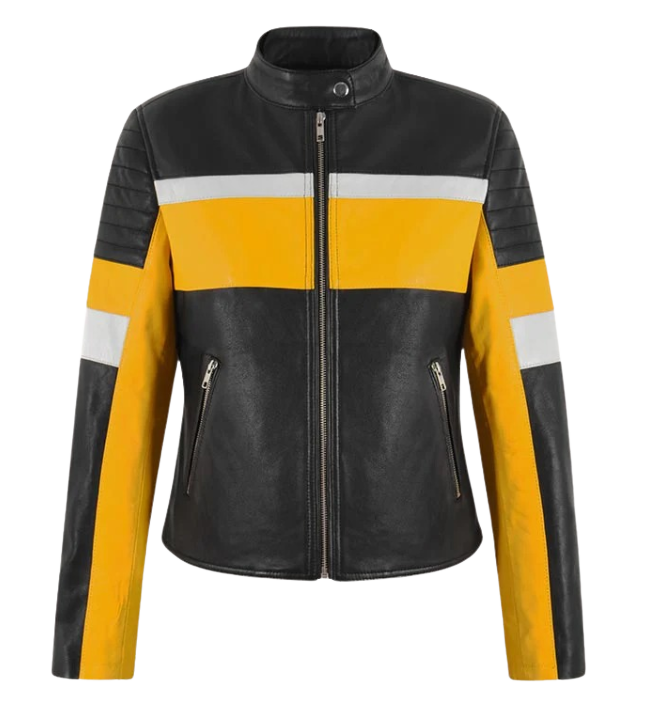
Sheepskin Leather Guide
What Is a Sheepskin Leather Jacket?
Understanding Sheepskin Leather
Sheepskin leather comes from the hide of a sheep and is known for its naturally soft grain, light weight, and flexibility. Because sheepskin fibers are finer and less densely packed than cowhide, the resulting leather feels supple almost immediately, without the lengthy break-in period associated with heavier hides. A genuine sheepskin jacket moves with the body rather than against it, which is why it’s a popular choice for everyday fashion pieces rather than heavy-duty outerwear.
It’s worth noting that “sheepskin leather” and “shearling” are not interchangeable terms, even though they’re often confused.
What Makes Shearling Jackets Different?
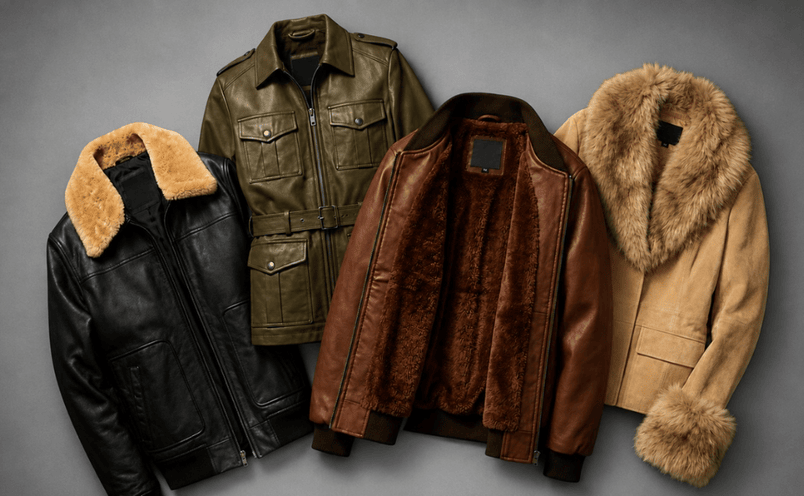
Shearling is sheepskin that has been tanned with the wool still attached to the hide. Instead of removing the fleece, manufacturers leave it intact on one side, creating a built-in layer of natural insulation. That retained wool is what gives shearling leather jackets their reputation for exceptional warmth—the wool traps body heat close to the skin, while the tanned hide forms a protective outer layer. Ordinary sheepskin leather, by contrast, has had the wool removed or processed away, so it doesn’t offer the same thermal benefit on its own.
Lightweight Feel
Sheepskin is generally lighter and easier to wear.
Everyday Wear
Sheepskin suits casual outfits, while cowhide handles frequent use.
Better Flexibility
Sheepskin requires minimal break-in time.
Motorcycle Protection
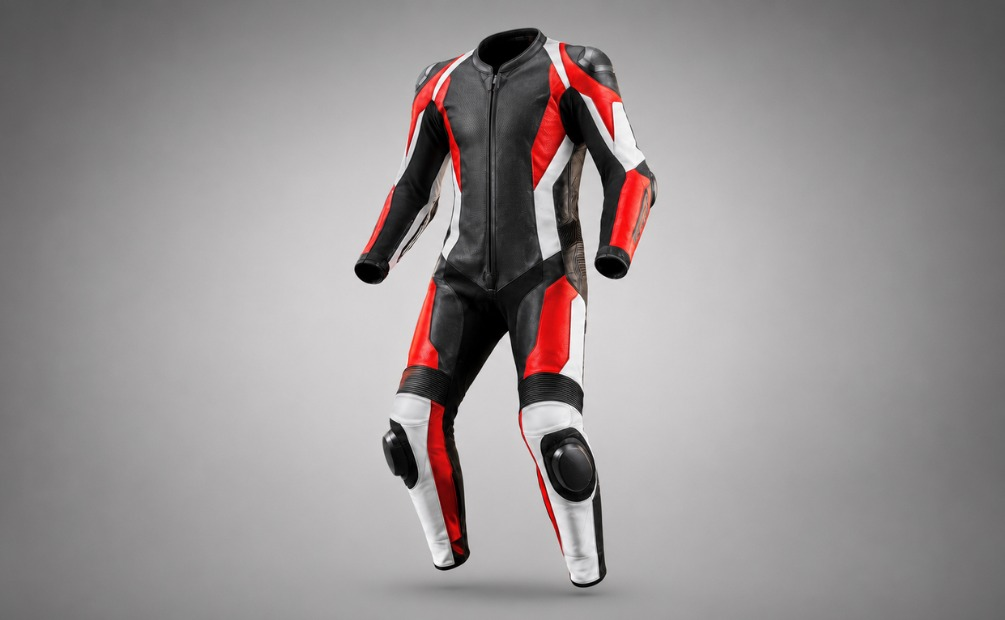
Cowhide is generally preferred for abrasion resistance in motorcycle gear.
Winter Insulation
Wool and shearling linings provide superior heat retention.
Best Winter Choice
Shearling is ideal for maximum warmth, while lined cowhide offers durability and wind protection.
Sheepskin Jacket Pros & Cons
Benefits and Drawbacks of Sheepskin Jackets
Sheepskin leather jackets offer several advantages for winter wardrobes:
- Soft and comfortable against the skin from the first wear
- Lightweight and flexible, making them easy to layer under or move in
- Suited to everyday fashion, pairing well with casual and smart-casual outfits
The trade-offs are worth considering too. Sheepskin can be more susceptible to scratches and surface wear than cowhide, particularly with lighter finishes, so it may need more careful handling over time. Shoppers browsing the TriCore sheepskin leather collection will find a range of finishes, from lightweight fashion sheepskin to fully wool-lined shearling designs.
What Is a Cowhide Leather Jacket?
Understanding Cowhide Leather
Cowhide leather is sourced from cattle hides and is typically thicker and more densely fibered than sheepskin. The tanning and processing methods used for cowhide preserve its natural grain while reinforcing its strength, which is why it’s the standard material for heavy-duty and motorcycle-grade leather jackets. The thickness that makes cowhide so durable also means it takes slightly longer to soften with wear compared to sheepskin.
Benefits of Cowhide Leather Jackets
Cowhide leather jackets are built for longevity and frequent use:
- Strong and durable construction that holds up to daily wear
- Good resistance to abrasion, making it a practical choice for active lifestyles
- Structured appearance that keeps its shape over time
- Suitable for frequent use when properly conditioned and maintained
Cowhide Leather Cons
Limitations of Cowhide Leather
Cowhide’s density is also its main limitation. A cowhide jacket typically feels heavier than a sheepskin equivalent and can feel stiff when new, gradually softening as it’s worn in. Critically, cowhide’s warmth is not inherent to the hide itself — it depends heavily on the lining and overall jacket construction, which is why two cowhide jackets can perform very differently in cold weather.
Sheepskin vs Cowhide: Key Differences Compared
Feature | Sheepskin Leather | Cowhide Leather |
Texture | Generally softer | Generally firmer |
Weight | Often lighter | Often heavier |
Flexibility | More supple | More structured |
Durability | Generally less abrasion-resistant | Generally more abrasion-resistant |
Break-in period | Usually minimal | May require more time |
Warmth | Depends on lining | Depends on lining |
Best use | Comfort and casual fashion | Durability and frequent wear |
This comparison highlights a key distinction: sheepskin leather wins on softness and weight, while cowhide leather wins on durability and structure. Neither hide is automatically “warmer” without factoring in lining, since warmth comes primarily from insulation layers rather than the leather itself. The exception is shearling, which is genuinely warmer than both plain sheepskin and cowhide because the retained wool fleece functions as a built-in insulating layer rather than an added lining.
Which Leather Jacket Is Warmer for Winter?
Is Sheepskin Leather Naturally Warmer?
Plain sheepskin leather is not automatically warmer than cowhide — its warmth comes from what’s added to it, not the hide alone. Softness and thermal insulation are two different properties. A sheepskin jacket can feel pleasant against the skin without providing significant cold-weather protection if it lacks a substantial lining. Shearling is the exception: because the wool fleece remains part of the hide, it delivers genuine natural insulation that plain sheepskin leather cannot match.
Does Cowhide Provide Better Protection Against Cold Wind?
Cowhide’s density gives it a natural advantage against wind. The thicker fiber structure resists cold air penetration more effectively than lighter hides, which matters for anyone facing exposed winter conditions, including bikers. That wind resistance is a genuine structural benefit of the hide — but it still needs to be paired with an insulating lining to keep the wearer warm rather than just sheltered from the wind.
Why Jacket Lining Matters More Than Leather Type
For both sheepskin and cowhide, lining is usually the deciding factor in overall warmth. Common options include:
- Quilted lining, which traps air pockets for lightweight insulation
- Wool lining, offering natural warmth and breathability
- Thermal insulation (synthetic fill), for maximum heat retention in a slim profile
- Shearling lining, combining a leather shell with a wool-lined interior for exceptional warmth
- Windproof construction, which blocks cold air penetration regardless of hide type
When comparing jackets for serious cold-weather performance, check the lining specification as closely as the leather type. For riders layering up before a winter trip, it’s worth browsing TriCore’s men’s leather motorcycle jackets to see how base layers, mid layers, and jacket lining work together for cold-weather riding.
Which Leather Jacket Is Better for Everyday Wear?
Sheepskin for Comfort and Casual Outfits
Sheepskin’s lightweight, supple feel makes it an easy jacket to wear all day, whether that’s running errands, commuting on foot, or layering over casual outfits. It requires minimal break-in and moves naturally with the body from the first wear.
Cowhide for Durability and Regular Use
Cowhide holds up better to repeated wear, bag straps, and daily friction, making it a practical choice for anyone who wants one jacket to last multiple winters without visible wear.
Comparing Weight, Flexibility and Movement
Sheepskin wins on weight and initial flexibility, while cowhide wins on long-term shape retention and resistance to scuffs. Neither is strictly “better” — the right choice depends on whether comfort or longevity matters more to the wearer.
Which Jacket Works Better for Daily Winter Use?
For most UK and European winters, a well-lined cowhide jacket suits daily commuting and frequent outdoor exposure, while a shearling or lined sheepskin jacket suits those who prioritize comfort and softness for shorter outings or layered city wear.
Which Leather Is Better for Motorcycle Riders?
Why Cowhide Is Commonly Used in Motorcycle Jackets
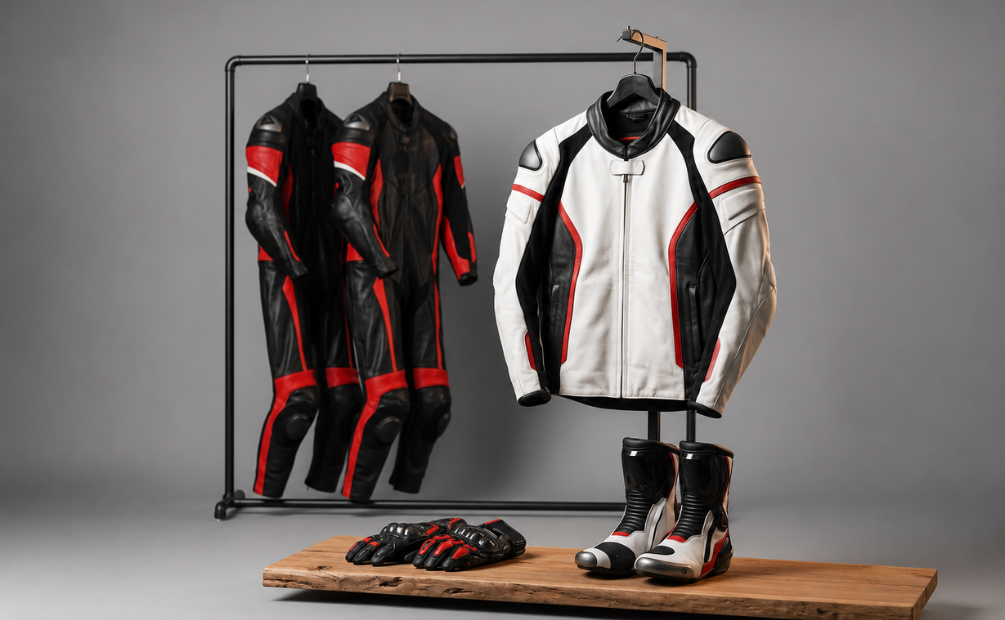
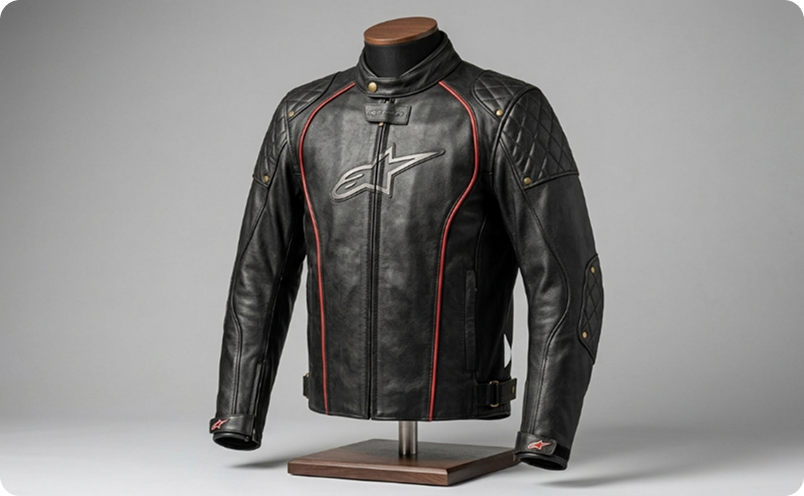
Cowhide is the standard material for motorcycle jackets because of its abrasion resistance, durability, and ability to support protective garment construction. Its density helps it withstand road friction better than lighter hides, which is a core requirement for riding gear. Riders exploring TriCore’s CE-certified leather motorcycle jackets will typically find cowhide as the base material in certified options.
Can Sheepskin Jackets Be Used for Motorcycle Riding?
Ordinary fashion sheepskin jackets should not automatically be considered protective riding gear. Standard sheepskin leather lacks the abrasion resistance and reinforced construction required for motorcycle safety standards. Riders looking for cold-weather protection on a bike should look specifically for garments built and certified for motorcycle use, rather than assuming any leather jacket offers equivalent protection.
Choosing a Motorcycle Jacket for Winter
When selecting winter riding gear, prioritize:
- Protective certification appropriate for motorcycle use
- Suitable thermal lining for cold-weather riding
- Wind protection at the cuffs, collar, and hem
- Correct armour positioning at shoulders, elbows, and back
- Comfortable layering that doesn’t restrict movement — browse TriCore’s CE-certified motorcycle riding jackets to find options built for cold-weather layering
How to Maintain Sheepskin and Cowhide Leather Jackets
Cleaning Sheepskin Leather Jackets
Sheepskin should be cleaned gently, using products specifically designed for soft leather or suede-finished hides. Avoid soaking the material, and let it air dry away from direct heat sources, which can cause the hide to stiffen or crack.
Cleaning and Conditioning Cowhide Jackets
Cowhide benefits from regular conditioning to keep the hide supple and prevent cracking. A leather conditioner applied every few months helps maintain flexibility, especially through dry winter heating seasons.
Protecting Leather from Rain and Moisture
Both leather types benefit from a water-repellent treatment before heavy winter use. If a jacket does get wet, let it dry naturally at room temperature rather than using direct heat, which can warp or dry out the hide.
Proper Storage During the Winter Season
Store leather jackets on padded hangers in a cool, dry space with good airflow. Avoid plastic covers, which can trap moisture, and keep jackets away from direct sunlight to prevent fading. For a full breakdown of seasonal care steps, explore the full range of genuine leather jackets and care-ready styles at TriCore’s leather jacket collection.
Sheepskin vs Cowhide: Which Should You Buy?
Use this quick decision guide based on your priorities:
- Choose sheepskin leather if softness, flexibility, and lightweight comfort matter most to you.
- Choose shearling if maximum natural insulation is your top priority for genuinely cold conditions.
- Choose cowhide if durability, structure, and frequent wear are more important than lightweight comfort.
- Choose a lined cowhide jacket if you want a durable outer shell combined with added winter insulation.
Final Verdict: Which Leather Jacket Is Best for Winter?
There’s no single winner in the sheepskin vs cowhide debate. Sheepskin leather delivers softness and light weight, cowhide delivers durability and structure, and shearling delivers genuine natural warmth through its retained wool fleece. What ultimately determines how warm and practical a jacket is comes down to lining, construction, fit, and how it will actually be worn — whether that’s daily commuting, casual winter outings, or life on a motorcycle.
Before buying, match the jacket to your specific use case rather than the hide type alone. Explore TriCore’s sheepskin leather jackets, cowhide leather styles, and full leather jacket collection to compare sheepskin, shearling, and cowhide options built for real winter conditions.
best for winter jacket
Frequently Asked Questions (FAQ)
1.Is sheepskin warmer than cowhide?
Plain sheepskin leather is not inherently warmer than cowhide. Warmth depends mainly on lining and construction. Shearling, which retains the wool fleece on the hide, is the exception and does offer genuine natural insulation that outperforms both plain sheepskin and cowhide.
2.Which leather is best for winter jackets?
Shearling is generally the best choice for maximum winter warmth due to its built-in wool insulation. For durability combined with warmth, a well-lined cowhide jacket is a strong alternative.
3.What is the difference between sheepskin and shearling?
Sheepskin leather has had the wool removed during processing, resulting in a smooth, lightweight hide. Shearling is sheepskin that retains the wool on one side, creating a natural insulating layer that sheepskin leather alone doesn’t provide.
4.Are cowhide leather jackets good for winter?
Yes, cowhide leather jackets can perform well in winter, particularly with a suitable lining such as quilted, wool, or thermal insulation. The hide’s density also offers natural wind resistance.
5.Which leather is better for motorcycle jackets?
Cowhide is the standard material for motorcycle jackets due to its abrasion resistance and ability to support protective, certified garment construction. Standard sheepskin leather is not typically suitable for motorcycle protection unless specifically built and certified for riding.