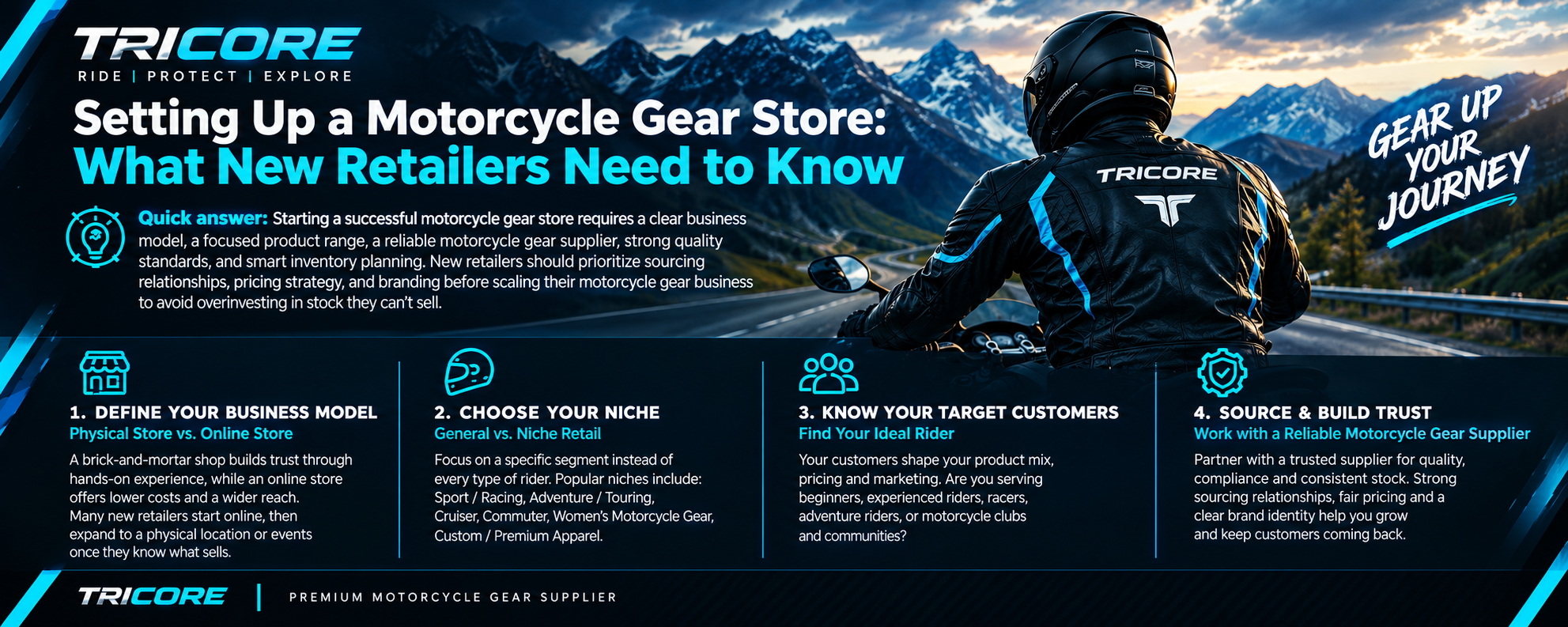
Setting Up a Motorcycle Gear Store: What New Retailers Need to Know
Setting Up a Motorcycle Gear Store
Setting Up a Motorcycle Gear Store: What New Retailers Need to Know
Quick answer: Starting a successful motorcycle gear store requires a clear business model, a focused product range, a reliable motorcycle gear supplier, strong quality standards, and smart inventory planning. New retailers should prioritize sourcing relationships, pricing strategy, and branding before scaling their motorcycle gear business to avoid overinvesting in stock they can’t sell.
Riders are gearing up, quite literally. As motorcycle ownership grows across recreational, commuter, and touring segments, demand for quality protective apparel keeps climbing right alongside it. For entrepreneurs eyeing this space, a motorcycle gear store can be a genuinely exciting opportunity, but it’s not the same as opening a regular apparel shop.
Motorcycle gear has to look good, fit well, and actually protect the person wearing it. That means retailers face a unique mix of decisions around safety compliance, material quality, and customer trust that a standard clothing retailer never has to think about. Get it right, and you build a loyal customer base that keeps coming back season after season. Get it wrong, and you’re stuck with unsold inventory (or worse, unhappy riders).
Before you invest a single dollar in stock, there are several foundational decisions to make: what kind of store you’re building, which products you’ll sell, who your customers actually are, where you’ll source your gear, and how you’ll price it all. This guide walks through each of these decisions so you can launch your motorcycle gear retailer with confidence instead of guesswork.
01
BUSINESS MODEL
Online, physical store, or hybrid model to reach customers and manage startup costs.
02
CHOOSE YOUR NICHE
Sport, adventure, cruiser, commuter, women's and premium motorcycle gear.
03
SUPPLIER & QUALITY
Reliable motorcycle gear suppliers, quality materials, safety standards and trusted products.
04
INVENTORY & PRICING
Smart inventory planning, competitive pricing and strong branding to build a successful motorcycle gear business.

Build Your Motorcycle Gear Store
Discover the right motorcycle gear for your retail business, from riding footwear and protective apparel to quality leather jackets. Build a focused product range with a reliable motorcycle gear supplier.
Plan Your Store Model
1. Define Your Motorcycle Gear Store Business Model
Physical Store vs. Online Motorcycle Gear Store
A brick-and-mortar shop lets customers try on jackets, feel the leather, and get fitted properly, which builds trust fast. But it also comes with higher overhead: rent, staffing, and a much bigger upfront inventory commitment.
An online motorcycle gear store flips that equation. You can launch with lower operational costs, test which products resonate before committing to bulk orders, and reach riders well beyond your local area. The tradeoff? You’ll need to work harder on sizing guides, product photography, and building trust before that first purchase.
Many new retailers land on a hybrid model: start online to validate demand, then open a physical location (or pop-up presence at rallies and events) once you know what sells.
STORE BUSINESS MODEL
Online, physical, or hybrid store models to manage costs and reach more customers.
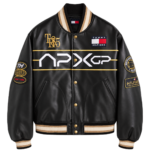
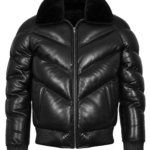
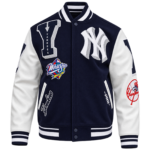
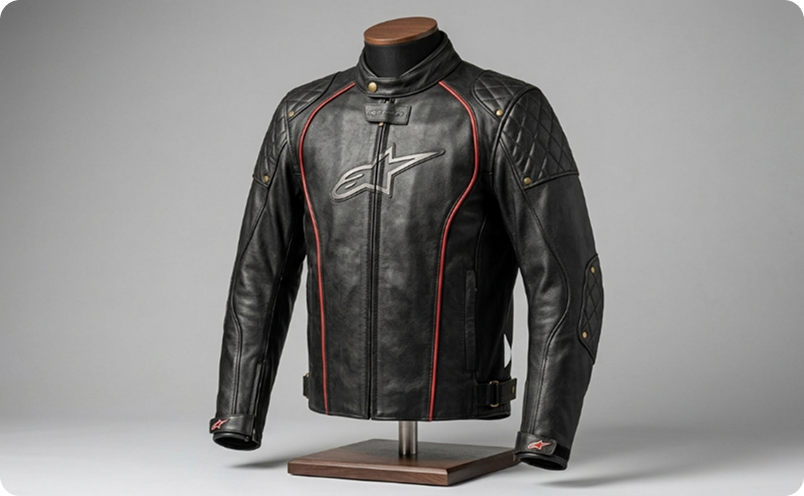
MOTORCYCLE JACKETS
Leather and textile jackets offering durability, weather protection, and riding comfort.
CHOOSE YOUR NICHE
Sport, adventure, cruiser, commuter, and premium motorcycle gear for different riding styles.
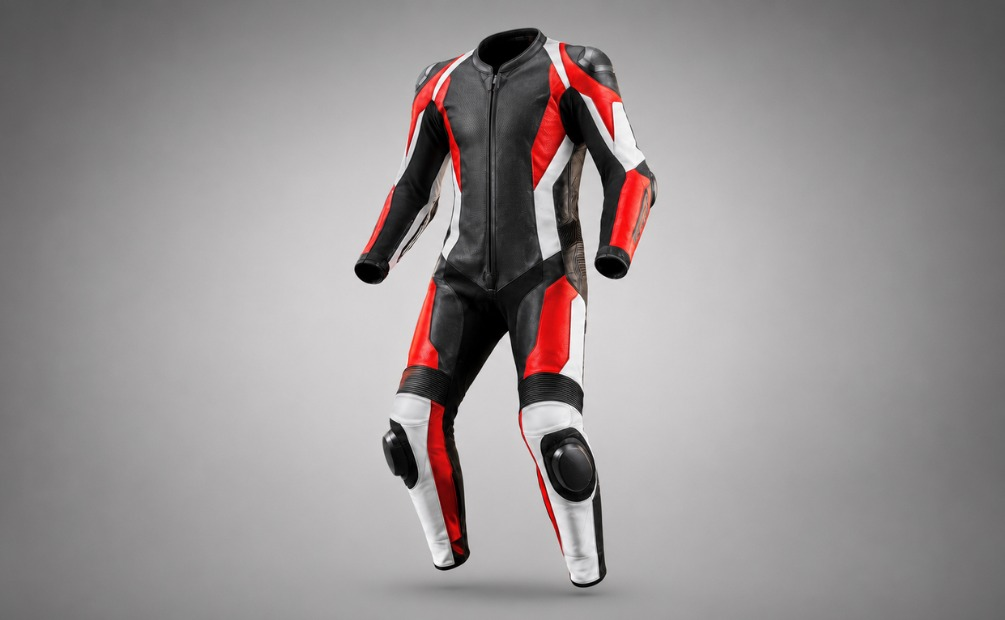
MOTORCYCLE RIDING SUITS
One-piece, two-piece, and racing suits designed for protection and performance.
TARGET CUSTOMERS
Beginner riders, experienced motorcyclists, racing professionals, and adventure riders.
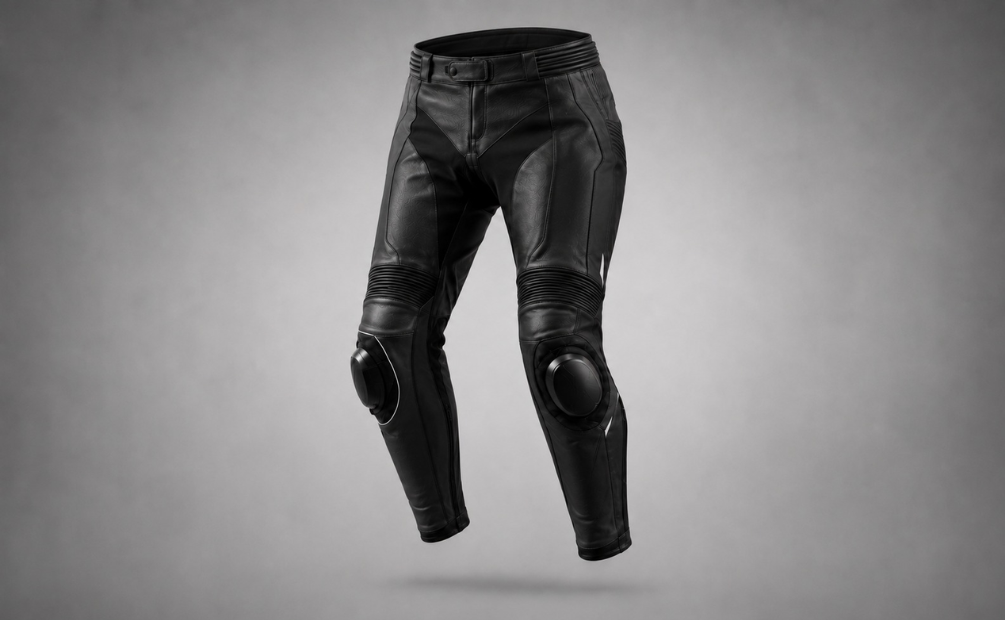
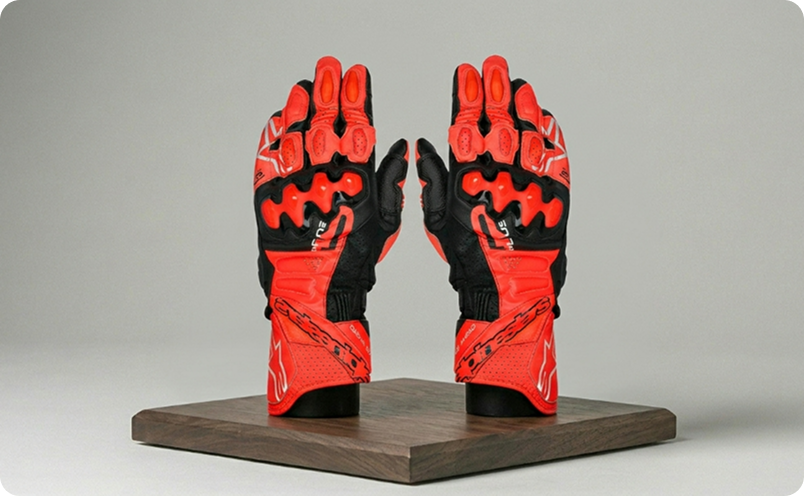
COMPLETE RIDING GEAR
Motorcycle pants, gloves, boots, and accessories to expand product options and boost cross-selling.
General vs Niche Gear
General Motorcycle Gear vs. Niche Retail
Trying to serve every type of rider from day one spreads your resources thin. Instead, consider specializing:
- Sport/racing gear built for performance and track use
- Adventure/touring apparel designed for long-distance comfort
- Cruiser gear with a classic, relaxed aesthetic
- Commuter gear focused on everyday practicality
- Women’s motorcycle gear, a segment that’s historically been underserved
- Custom/premium motorcycle apparel for riders who want something distinctive
Picking a niche makes your marketing sharper and your inventory decisions much easier.
Know Your Customers
Decide Who Your Target Customers Are
Your ideal customer shapes everything from your product mix to your pricing. Are you serving beginner riders who need affordable, entry-level protection? Experienced riders looking for premium performance gear? Professional or racing customers with specific technical requirements? Adventure riders prepping for multi-day trips? Or motorcycle clubs and communities with their own culture and expectations?
Answering this early saves you from building a motorcycle gear business that tries to be everything to everyone.
2. Decide Which Motorcycle Gear Products to Sell
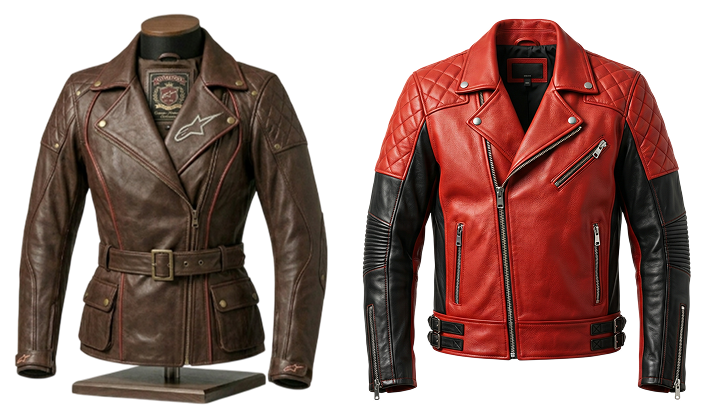
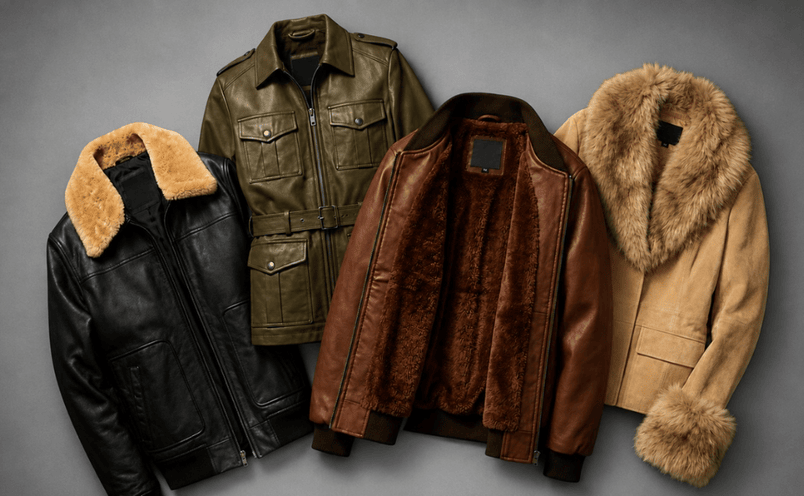
Motorcycle Jackets
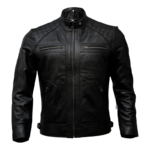
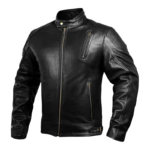
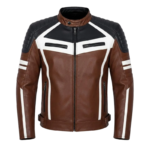
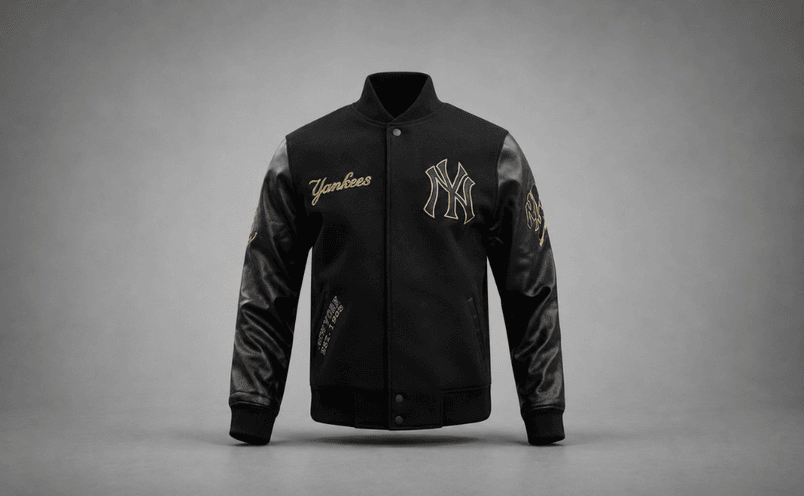
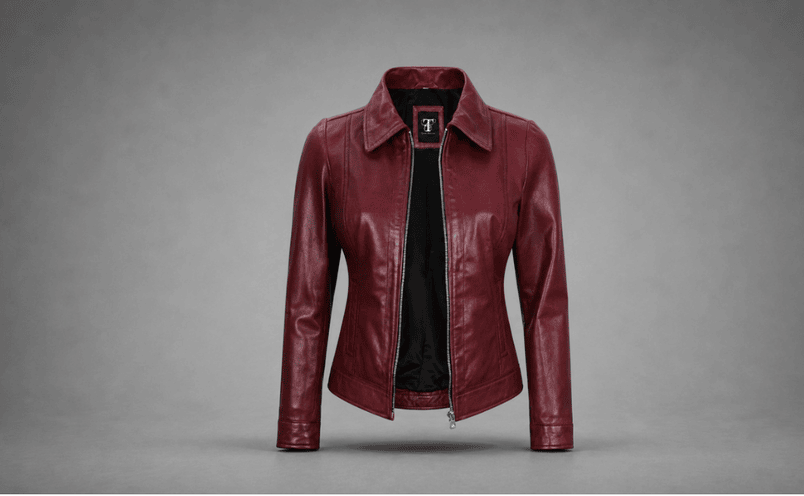
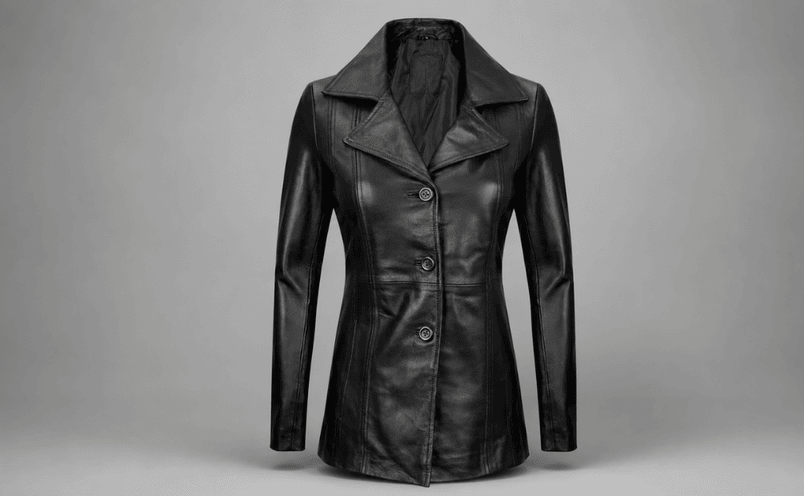
Jackets are typically the anchor product for any motorcycle gear store. You’ll need to decide between leather (classic, durable, abrasion-resistant) and textile (lighter, weatherproof, often more versatile), as well as whether you’re offering protective jackets built for serious riding or lifestyle jackets that lean more casual.
Motorcycle Riding Suits
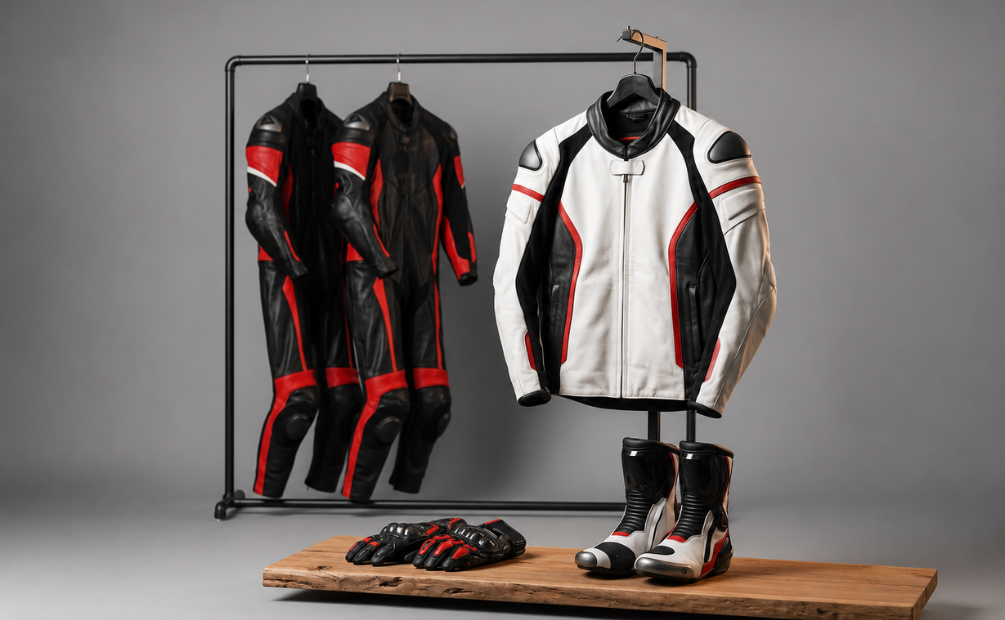
Riding suits come in a few formats: one-piece suits favored by racers for maximum protection, two-piece suits that offer more flexibility for everyday wear, and dedicated racing suits engineered for track performance.
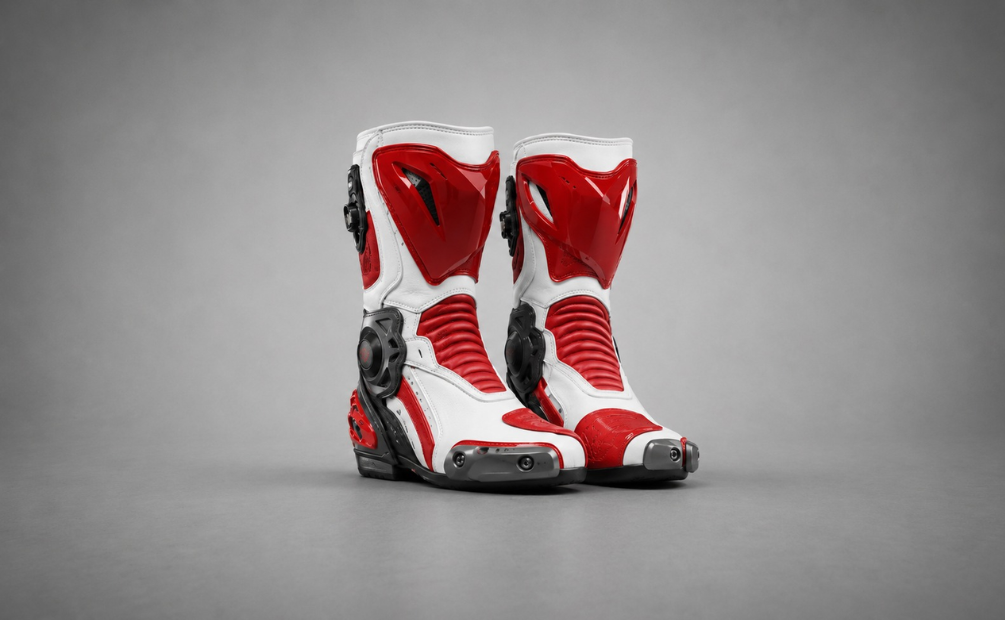
Motorcycle Pants, Gloves, Boots and Other Gear
Once your core jackets and suits are set, build out a complementary range with pants, gloves, boots, and accessories. This creates natural cross-selling opportunities, since a rider who buys a jacket is often shopping for gloves or boots to match.
Start With a Focused Product Range
It’s tempting to stock every style and color imaginable right out of the gate, but resist that urge. A tighter, well-curated selection is easier to manage, market, and sell through. Test demand with a focused range first, then expand based on what customers actually buy. TriCore’s current catalogue, for instance, spans motorcycle jackets, suits, pants, gloves, and footwear, giving new retailers a ready-made product ecosystem to build around.
3. Find the Right Motorcycle Gear Supplier
Manufacturer vs. Wholesaler vs. Distributor
Understanding how to find a motorcycle gear supplier starts with knowing your options. A manufacturer produces gear directly (and often supports custom or private-label work), a wholesaler buys in bulk and resells at volume pricing, and a distributor typically manages logistics and regional supply. Which one makes sense depends on your order volume, your need for customization, and how hands-on you want to be with product development.
What to Look for in a Motorcycle Gear Manufacturer
Knowing how to choose a motorcycle gear manufacturer can make or break your launch. Evaluate potential partners on:
- Product quality and materials
- Manufacturing capacity to support your order volume
- Consistent sizing across production runs
- Documented quality control processes
- Realistic production lead times
- Customization capabilities for future branding needs
- Clear, responsive communication and support
A dependable motorcycle gear manufacturer should feel like a partner in your growth, not just a vendor you place orders with.
Why OEM and Private Label Can Matter for New Retailers
If you want to build your own brand rather than resell someone else’s, look into OEM and private label motorcycle gear options. This lets you create custom designs, apply your own branding and packaging, and differentiate your products from competitors selling identical stock. TriCore specifically supports OEM and private-label production alongside wholesale and distributor supply, giving retailers flexibility depending on where they are in their growth journey
4. Understand Motorcycle Gear Quality and Safety Standards
Materials and Construction
Quality starts with materials: leather grade, textile durability, stitching strength, zipper and hardware reliability, and reinforcement in high-impact areas like shoulders, elbows, and knees.
Protective Features
Look for CE-rated protection, properly placed armor, strong abrasion resistance, and genuine impact protection. These aren’t just marketing checkboxes; they’re what actually keeps a rider safe in a fall.
What Retailers Should Ask Suppliers About Quality
Before committing to a supplier, ask for testing and certification documentation, detailed product specifications, an explanation of their quality-control process, and evidence of consistency between production batches. A supplier who can’t answer these clearly is a red flag.
5. Plan Your Inventory and Initial Stock
How Much Inventory Should a New Store Carry?
This is one of the most common questions new retailers ask: how much inventory does a motorcycle gear store need to get started? The short answer is less than you think. Start with demand-based quantities rather than guessing, and avoid tying up too much capital in stock that might not move.
Choosing Sizes, Colors and Styles
Focus on core sizes that cover the majority of your target customers, popular colors that have broad appeal, and seasonal considerations (heavier gear for colder months, ventilated options for summer riding).
Create a Balanced Product Mix
Aim for a spread across entry-level, mid-range, premium, and custom or private-label products. This gives every type of customer, from budget-conscious beginners to riders wanting something exclusive, a reason to buy from you.
6. Calculate Your Motorcycle Gear Store Pricing
Understand Your Total Product Cost
Your true product cost includes far more than the manufacturing or wholesale price. Factor in shipping, duties and taxes, packaging, storage, and marketing spend before you set a single retail price.
Set Retail Prices and Margins
You’ve got a few pricing approaches to choose from: cost-based pricing (marking up from your total cost), market-based pricing (aligning with competitor pricing), or premium positioning (charging more based on quality or exclusivity).
Leave Room for Promotions
Build margin flexibility into your pricing from the start so you can run seasonal sales, new-customer offers, and bundle pricing without cutting into profitability.
7. Build Your Motorcycle Gear Store Brand
Choose a Clear Brand Position
Decide what your store stands for: performance, premium quality, affordability, adventure-readiness, or custom individuality. This position should influence every product and marketing decision you make going forward.
Create Consistent Branding
Your logo, packaging, product labels, photography, and website design should all tell the same visual story. Consistency builds recognition and trust, especially for a new motorcycle gear retailer trying to establish credibility.
Consider Private-Label Motorcycle Gear
Custom branding, unique colors and designs, and long-term brand equity are all easier to build when you control the product itself rather than reselling generic stock.
8. Set Up Your Online Motorcycle Gear Store
Essential Website Pages
At minimum, your site needs a homepage, clear product categories, detailed product pages, an About page, and straightforward Shipping, Returns, and Contact pages.
What Every Motorcycle Gear Product Page Should Include
Riders want specifics before they buy: full product specifications, materials used, protection details, a reliable size guide, quality product images, shipping information, and answers to common questions.
Build Trust Before the First Purchase
Reviews, clear policies, secure checkout, transparent quality information, and real (not stock) product photography all help nervous first-time buyers feel confident hitting “add to cart.”
9. Develop a Marketing Strategy for Your New Store
SEO for Motorcycle Gear
Target relevant motorcycle gear keywords across your product and category pages, and support them with buying guides and informational content that answers real rider questions.
Social Media Marketing
Instagram and TikTok are ideal for showcasing gear in action, Facebook works well for community building, and YouTube gives you space for in-depth reviews and how-to content.
Motorcycle Communities and Partnerships
Get involved with riding groups, motorcycle clubs, local dealers, events, and relevant influencers. These communities are often where your most loyal customers already spend their time.
10. Build a Reliable Supply Chain
Understand Your Supplier’s Production Process
Know each stage your supplier goes through: sampling, production, quality inspection, packaging, and shipping. This visibility helps you set realistic timelines for your own customers.
Plan for Reorders
Track your best-selling products, monitor inventory closely, and keep an open line of communication with suppliers so you’re never caught flat-footed on a popular item.
Work With a Supplier That Can Scale
Your first order might be modest, but your supplier should be able to grow with you: increasing production volumes, supporting new designs, and expanding into wholesale motorcycle gear or private-label programs as your motorcycle gear business matures.
11. Common Mistakes New Motorcycle Gear Retailers Should Avoid
- Buying too much inventory too early
- Choosing suppliers based only on price
- Ignoring product quality in favor of faster margins
- Offering too many unrelated products
- Not understanding customer segments before buying stock
- Poor product photography that undersells great gear
- Weak or confusing size guides
- Ignoring after-sales service and support
- Not having a reliable replenishment strategy in place
Avoiding these missteps early on saves you time, money, and a lot of frustrated customers.
Final Thoughts: Build Your Store Around the Right Products and Supplier
A thriving motorcycle gear store takes more than uploading product photos and waiting for orders to roll in. Product quality, a clear understanding of your customers, smart pricing, cohesive branding, and a dependable supplier all work together to build a business riders trust.
Before you scale your inventory, focus on establishing a reliable manufacturing or sourcing relationship. That single decision will shape nearly everything else about your motorcycle gear business, from the quality customers experience to how quickly you can grow.
Looking for a motorcycle gear manufacturer for retailers? Explore TriCore’s custom motorcycle gear, OEM, private-label, and wholesale motorcycle gear supplier solutions to find the right fit for your store. You can also check out our related guide on motorcycle gear manufacturing for a deeper look at sourcing and production.
Online Store or Physical Store?
Frequently Asked Questions(FAQ)
1.How much initial capital is needed to start a motorcycle gear store?
Initial investment depends heavily on your retail model. An e-commerce store starting with a focused product range can launch with lower capital by partnering with B2B suppliers offering reasonable Minimum Order Quantities (MOQs). A physical storefront, on the other hand, requires higher upfront capital for lease agreements, store fixtures, and broader initial inventory.
2.Should new retailers start with an online store or a physical storefront?
Starting with an online store allows new brands to test market demand, refine sizing guides, and establish brand presence with lower operational overhead. Many successful retailers use an e-commerce-first or hybrid approach, building an audience online before investing in a physical location.
3.What is the difference between OEM and private-label motorcycle gear?
OEM (Original Equipment Manufacturer) involves creating completely custom motorcycle gear based on your specific design specifications, materials, and features. Private label motorcycle gear manufacturing allows you to select existing, high-quality gear styles from a manufacturer and apply your own custom branding, logos, and packaging.
4.How can retailers verify CE safety standards and product quality?
Always request official testing documentation, material specs, and compliance certificates from your manufacturer. Reliable suppliers provide clear verification for CE-rated impact protectors (such as EN 1621), abrasion resistance standards, and batch quality-control procedures before production.
5.How can a new store avoid tying up too much capital in inventory?
Start with a focused product selection (core sizes and essential gear like jackets and gloves) rather than carrying every style immediately. Partner with a flexible OEM motorcycle gear manufacturer or distributor that supports reliable replenishment cycles and scalable production as your sales grow.