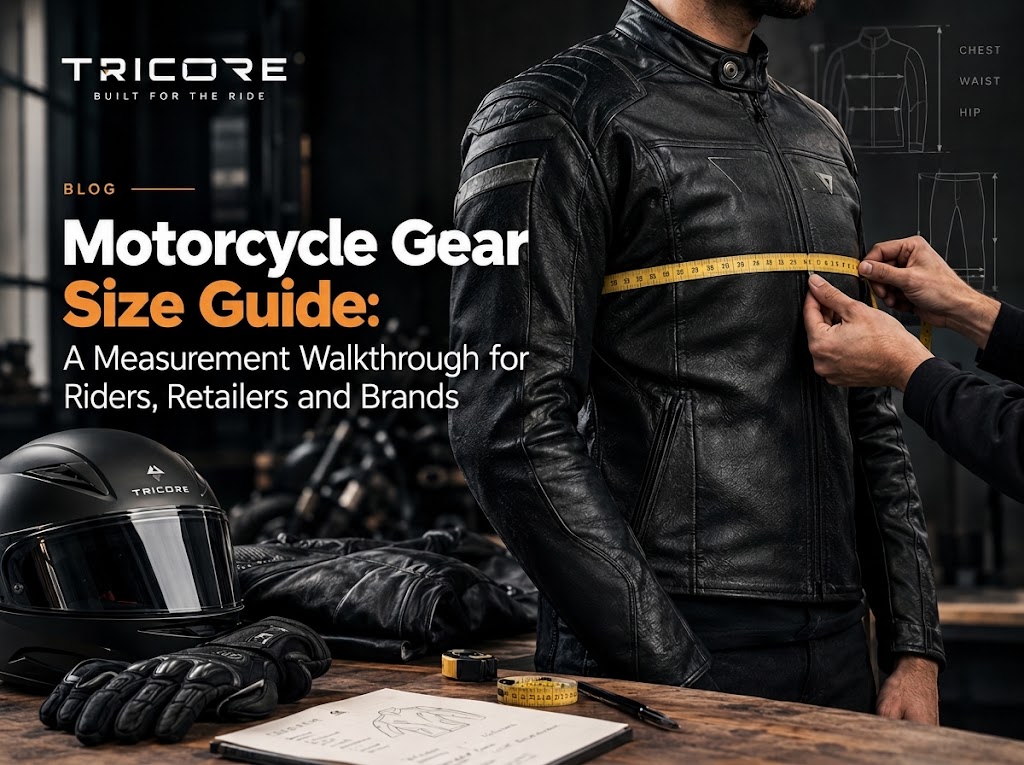
Motorcycle Gear Size Guide: A Measurement Walkthrough for Riders, Retailers and Brands
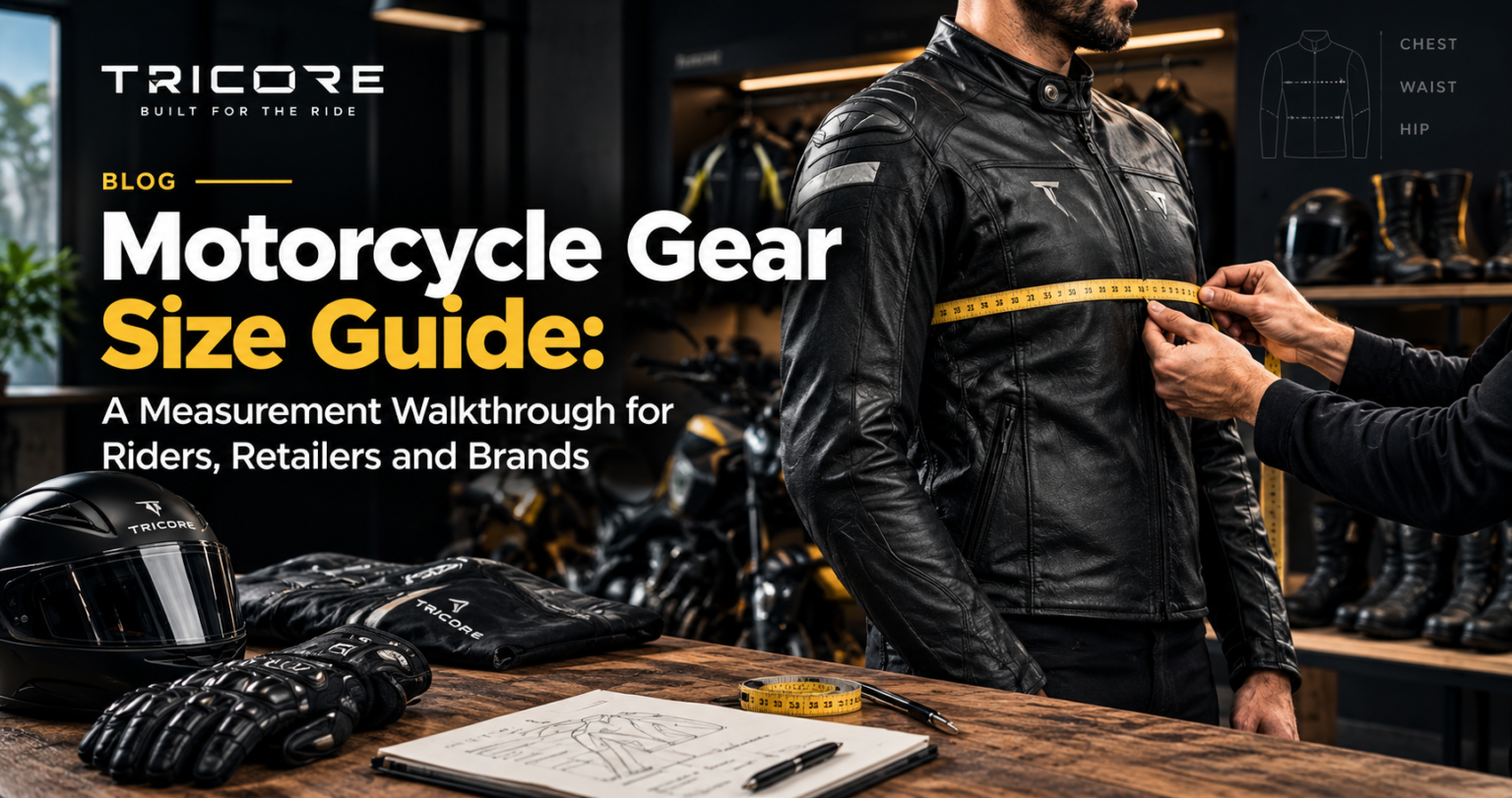
Motorcycle Gear Size Guide
Motorcycle Gear Size Guide: A Measurement Walkthrough for Riders, Retailers and Brands
Quick answer: The right motorcycle gear size is determined by accurate body measurements, the manufacturer’s specific size chart, your intended riding position, and the garment’s construction — not the size you wear in everyday clothing. Measuring chest, waist, hips, shoulders, sleeve length, and inseam against the brand’s own chart is the only reliable way to get a safe, comfortable fit.
Ordering motorcycle gear by your usual clothing size is one of the most common mistakes riders make. A jacket cut for city wear assumes a very different posture than one built for leaning over a sportbike’s tank. Riding gear also carries armour, protective panels, and reinforced seams that need to sit in exact positions on the body — something a standard “medium” from a high-street store was never designed to account for.
Get the fit wrong, and the consequences go beyond a baggy sleeve or a tight waistband. Loose armour can shift away from the joints it’s meant to protect. An overly restrictive jacket can limit the arm movement needed to operate the controls safely. Trousers that ride up when seated can leave skin exposed at exactly the point where abrasion risk is highest. None of this is a trivial inconvenience — it directly affects comfort, confidence, and protection on the road.
Accurate measurements matter to more than just individual riders. Online shoppers rely on precise size charts because they can’t try gear on before buying. Retail teams need consistent measurement guidance to reduce returns and support customers confidently. And motorcycle apparel brands depend on standardised sizing to maintain quality and fit consistency across every batch they produce.
This guide walks through exactly how to measure yourself for motorcycle gear, how to read and interpret a size chart, how to check fit in a real riding position, and when custom sizing becomes worth considering — whether you’re a rider buying your first jacket or a brand building a sizing process from scratch.
01
Why Fit Matters
Correctly fitted motorcycle gear keeps armour in place and improves comfort and protection while riding.
02
Proper Gear Fit
Gear should fit securely while allowing natural movement in your intended riding position.
03
Snug vs Tight
A snug fit supports movement, while excessively tight gear can restrict comfort and flexibility.
04
Jacket Fit
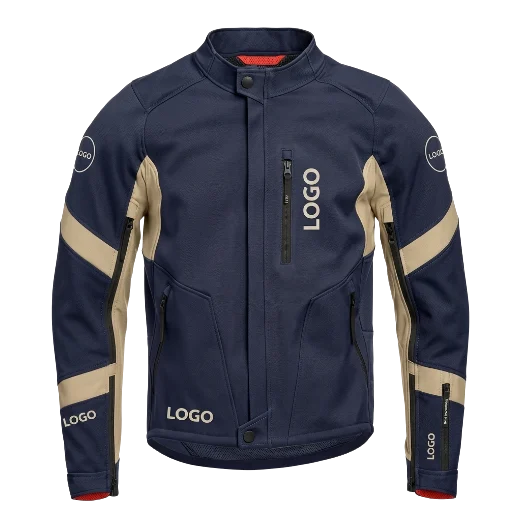
Check chest, shoulders and sleeve length to ensure proper coverage when reaching for handlebars.
Motorcycle Size Guide
Learn how to measure your chest, waist, hips, sleeve length, and inseam to find the right motorcycle gear size. Accurate measurements help riders, retailers, and brands choose the best fit.
Customize Your Gear →Perfect Fit
How should motorcycle gear fit?
Motorcycle gear should fit close enough to keep armour and protective panels correctly positioned, but with enough room to move freely in the riding position you’ll actually use. A comfortable fit allows full range of motion at the shoulders, elbows, and knees without any pulling, while an excessively loose fit lets padding and panels shift out of place during a ride.
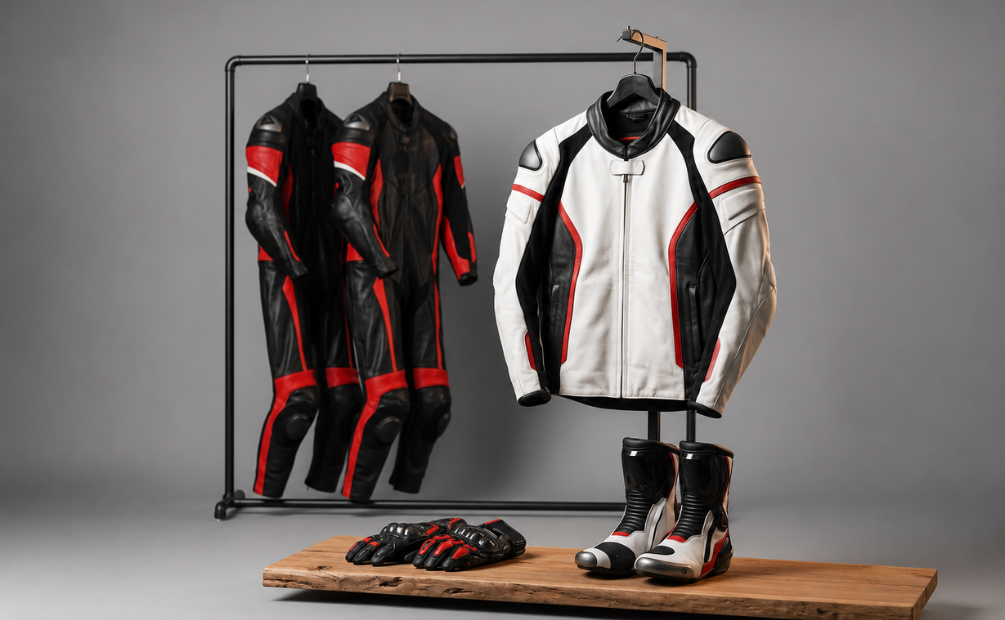
Fit should always be assessed in the posture the gear is designed for, not standing upright in a fitting room mirror. A touring jacket, designed for a more upright seating position, will fit differently than a sport-cut jacket designed for an aggressive forward lean. Race-oriented suits are cut tighter still, built to eliminate excess fabric that could flap at speed.
What is the difference between a snug fit and a tight fit?
A snug fit means the garment follows the shape of your body without restricting movement — you can raise your arms, bend your knees, and twist your torso without the fabric pulling tight. A tight fit, by contrast, restricts movement, digs in at the seams, or prevents you from closing zips and fasteners comfortably. If you can’t comfortably mimic your riding posture while wearing the gear, it’s too tight.
How should a motorcycle jacket fit when riding?
A motorcycle jacket should sit slightly forward when you lean into a riding position, with sleeves long enough to stay covered even when your arms are extended toward the handlebars. There shouldn’t be a gap between the sleeve and your gloves, and the shoulder seams should align with your actual shoulder points rather than sitting too high or too low.
How should motorcycle trousers fit at the waist, hips, and knees?
Motorcycle trousers should sit comfortably at the waist without digging in when seated, with enough room through the hips and knees to bend into a riding position. Knee armour should remain aligned with your kneecap whether you’re standing or seated — if it shifts noticeably when you sit down, the trousers are the wrong size or the adjustment straps need tightening.
Why should riders check gear while seated on a motorcycle?
Standing posture and seated riding posture change how a garment sits on the body. A jacket that looks fine standing upright might ride up at the back once you lean forward, exposing skin at the lower back. Checking fit while seated — ideally on the actual motorcycle you’ll be riding — reveals problems that a mirror check alone won’t catch.
It’s worth noting that fit instructions should always follow the specific garment’s design and the manufacturer’s guidance. There’s no single universal fit that applies to every riding style or every product.
Trousers Fit
Correct waist, hip and inseam measurements help maintain comfort and knee armour alignment.
Body Measurements
Measure your chest, waist, hips, sleeve length and inseam before selecting your gear size.
Seated Fit Check
Check your gear while seated to identify riding discomfort, restricted movement or exposed areas.
Size Chart Guide
Compare your body measurements with the specific product chart instead of everyday clothing sizes.
Measuring Tools
Use a flexible measuring tape and the manufacturer's size chart for accurate measurements.
Custom Sizing
Explore custom measurements, fit adjustments, colors, and branding options to meet your requirements.
Essential Measuring Tools
What tools do you need to measure motorcycle gear sizes?
Taking accurate measurements doesn’t require specialist equipment, but using the right basic tools makes the process repeatable and reliable:
- A flexible measuring tape (fabric, not metal)
- A mirror, or ideally a second person to help take measurements
- A notepad or digital measurement sheet to record results
- A well-fitting base layer, or the clothing recommended by the manufacturer
- The brand’s official size chart and measurement instructions
How to use a measuring tape accurately
Keep the tape flat against the body, running level and parallel to the floor at each measurement point. Avoid twisting the tape or letting it dip lower at the back than the front, as this can throw off chest and waist readings by several centimetres.
Should you measure over clothing or directly over the body?
This depends entirely on the manufacturer’s instructions. Some brands recommend measuring directly over the body or a thin base layer, while others specify measuring over the clothing you’d typically wear underneath the gear. Always follow the specific product’s guidance rather than assuming one method applies universally.
How tight should the tape be?
The tape should sit snugly against the body without compressing the skin or sagging loosely. A good test: you should be able to slide one finger comfortably under the tape at the measurement point.
How should you record measurements in centimetres and inches?
Record every measurement in both centimetres and inches where possible, and clearly label which unit you’re using before comparing against a size chart. Mixing units is one of the most common — and easily avoidable — sizing mistakes.
Callout: Measure carefully, record the units, and follow the instructions supplied with the specific product you’re buying.
Measurement Steps Guide
Step-by-step motorcycle gear measurement walkthrough
This is the core practical section of the guide. Use the following checklist as the basis for your own measurement record, keeping in mind that exact measurement points vary by product and manufacturer.
How to measure chest circumference for a motorcycle jacket
Measure around the fullest part of your chest, keeping the tape level front and back. Avoid pulling it tight enough to compress your chest — the reading should reflect your natural chest size while breathing normally.
How to measure waist and hips for motorcycle trousers
Measure around the waist position specified in the garment’s instructions, since different brands define “waist” at slightly different points on the body. Then measure around the fullest part of your hips and seat — this is particularly important when selecting riding trousers or one-piece suits, where hip room affects both comfort and mobility.
How to measure sleeve and arm length
Measure along the route specified by the manufacturer, typically from a defined shoulder point down to the wrist, with your arm held in the position recommended in the instructions (often slightly bent, as it would be gripping a handlebar).
How to measure inseam for riding trousers
Measure from the crotch point down to the hem or ankle reference point specified in the chart. Once you’ve recorded this measurement, check how the trousers actually sit when seated on a motorcycle — inseam length that looks correct standing can behave differently once you’re in riding position.
Which extra measurements are needed for a motorcycle suit?
Depending on the product, you may also need to record biceps, forearms, thighs, knees, calf circumference, and torso length. One-piece suits in particular often require additional measurements to account for how the upper and lower body connect in a seated riding posture.
How to double-check measurements before ordering
Take each measurement twice and compare the results. If there’s more than a small discrepancy between attempts, re-measure a third time. Cross-reference every figure against the specific product’s size chart before placing an order, rather than relying on memory or a previous purchase from a different brand.
How to read a motorcycle gear size chart
Understanding a size chart means understanding the difference between body measurements and garment measurements. Body measurements reflect your actual dimensions, while garment measurements reflect the finished size of the product — which may include extra room for armour, liners, or layering.
How to choose a size when your measurements fall between sizes
When a measurement falls between two sizes on a chart, check which other measurements (such as sleeve length or inseam) align most closely with each size option, and consider how the garment is meant to fit — snug sport cuts often suit sizing down, while touring or adventure gear may suit sizing up for extra layering room. Always check the manufacturer’s specific guidance for between-size situations before deciding.
Are motorcycle gear sizes the same across brands?
No. Size labels such as S, M, L, and XL vary considerably across motorcycle apparel brands, and there is no universal industry standard. A medium from one brand might correspond to a small or large from another, which is why relying on a size chart — rather than a label — is essential every time you buy from a new brand.
What is the difference between body measurements and garment measurements?
Body measurements describe your physical dimensions, while garment measurements describe the finished product, including any intentional ease built in for movement, armour, or layering. A size chart listing “garment measurements” will typically run larger than your actual body measurement at the same size label.
Should you size up for a thermal layer or base layer?
If you plan to wear a thermal or base layer underneath your gear regularly, check whether the manufacturer’s chart already accounts for this. Some brands build in room for layering, while others recommend sizing up if you intend to wear bulkier thermals underneath.
Men’s, women’s, and unisex cuts can also differ meaningfully in torso length, hip allowance, and shoulder width, even within the same brand. Likewise, the materials used — leather, textile, stretch panels, liners, and armour — all influence how a labelled size actually fits once worn.
How should different types of motorcycle gear fit?
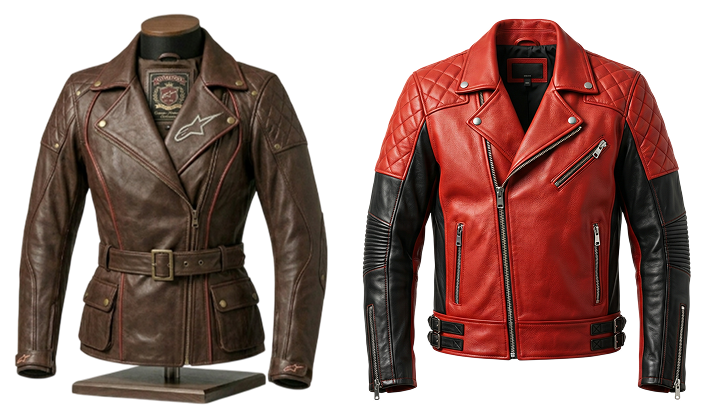
Motorcycle jackets
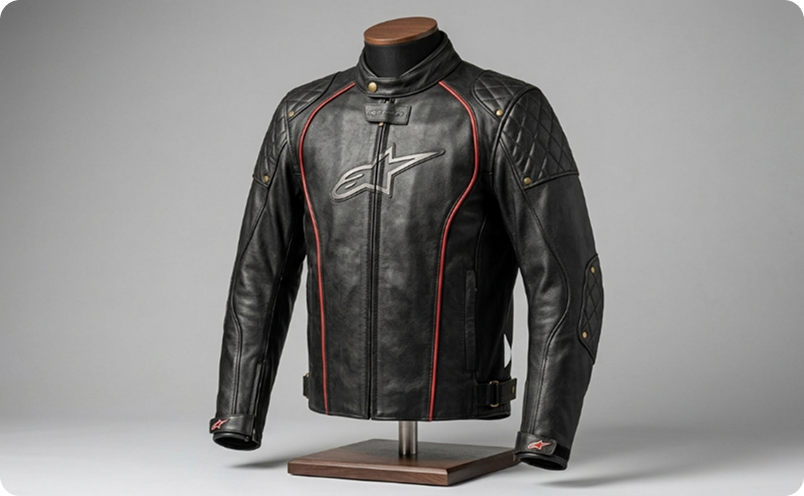
A well-fitted motorcycle jacket should allow full arm extension without the sleeves riding up, keep the shoulder seams aligned with your natural shoulder points, and maintain torso length that doesn’t expose the lower back when leaning forward. Armour at the shoulders and elbows should stay in position throughout a full range of movement.
Motorcycle trousers
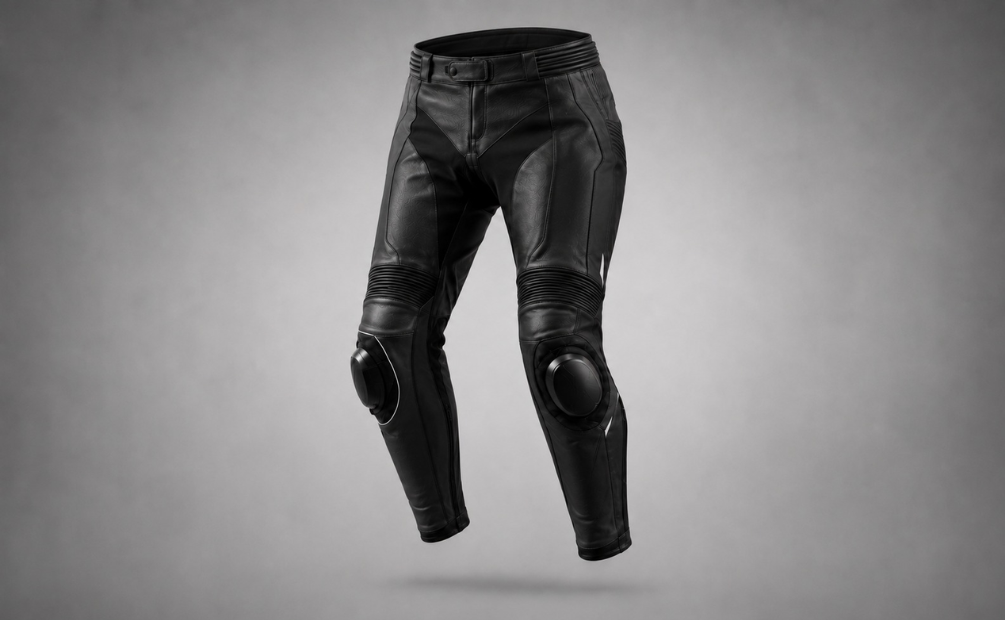
Fit should be assessed around the waist, hips, seat, thighs, and knees, with particular attention to inseam length and how the trousers overlap with boots. Riding trousers need enough room through the knee to bend into a seated position without restricting circulation or movement.
One-piece and two-piece motorcycle suits
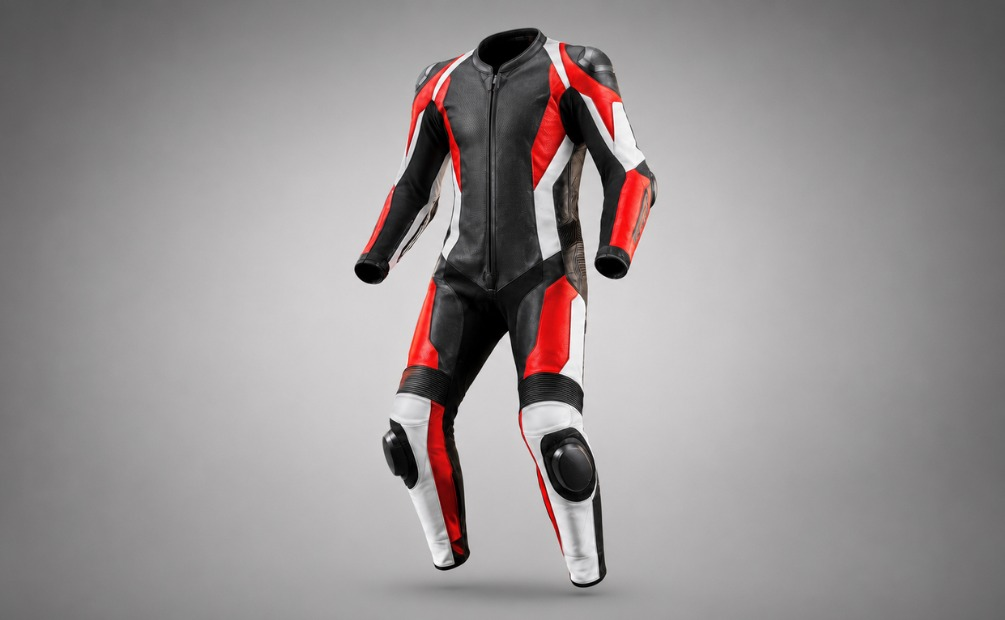
Torso length is especially important in suits, along with shoulder-to-crotch measurements where the manufacturer requests them. Leg length and riding posture both affect how a one-piece suit performs, since any misalignment between the upper and lower body sections can cause bunching or restriction when seated.
Motorcycle gloves
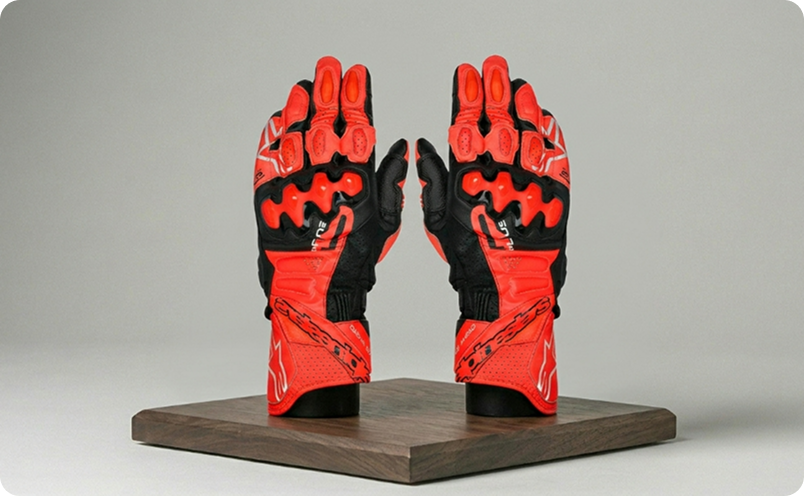
Follow the specific brand’s hand-circumference and hand-length measurement instructions closely, since glove sizing varies more than almost any other gear category. Excess material bunching at the fingertips, or restricted finger movement when gripping, are both signs the size is wrong.
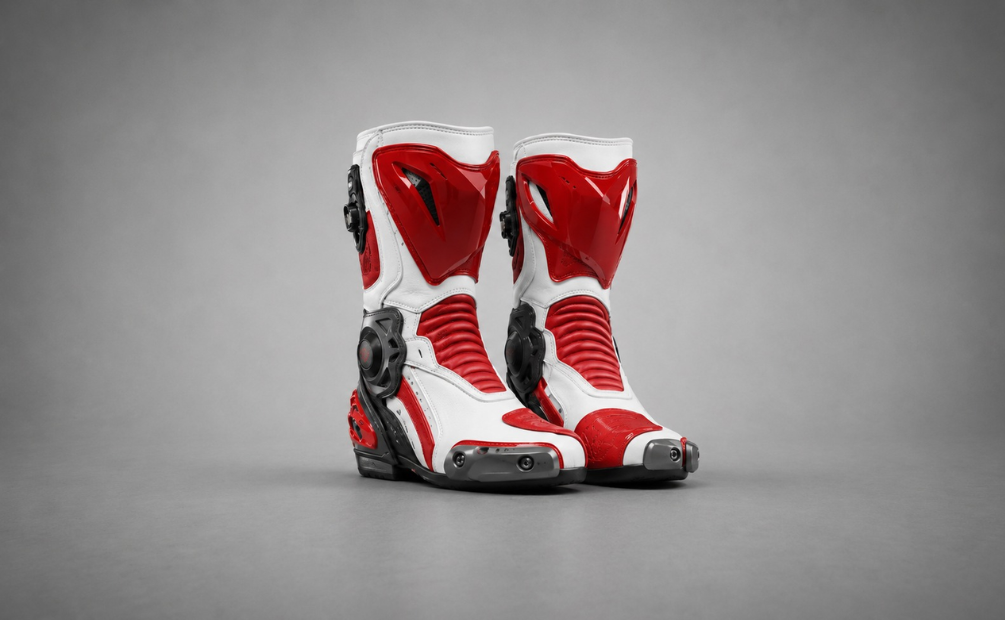
Motorcycle boots and riding shoes
Follow the footwear manufacturer’s foot-length and width guidance rather than translating from regular shoe sizes. Pay close attention to heel hold — a boot that allows heel lift when walking will perform even worse when braced against footpegs — and ensure there’s adequate toe room without excess space that could affect control feel.
How to check motorcycle gear fit in a riding position
A standing fit check only tells part of the story. Gear needs to be assessed in both standing and seated positions to confirm it performs correctly once you’re actually riding.
How to check a motorcycle jacket while seated
Sit in your normal riding posture, reach forward as though gripping the handlebars, and check whether the jacket rides up at the back or restricts shoulder movement. The sleeves should stay in place and the torso should remain covered throughout the movement.
How to check trouser length on a motorcycle
While seated with your feet on the pegs or footboards, check whether the trouser hem stays in contact with your boots or rides up to expose skin. Knee armor should remain aligned with your kneecap in this seated position, not just when standing.
What are common signs that motorcycle gear does not fit correctly?
Common signs include armor shifting out of position during movement, sleeves or trouser legs riding up when seated, restricted movement when reaching for controls, visible gaps at the waist or wrists, and excessive bunching of fabric at the joints.
Important: A fit check is a useful step, but it isn’t a substitute for certification, inspection, or the manufacturer’s own safety guidance. Correct sizing supports protective performance—it doesn’t guarantee it on its own.
Common motorcycle gear sizing mistakes and how to avoid them
The best way to avoid sizing mistakes is to take accurate measurements, use the correct product-specific chart, and verify fit in the intended riding position before finalising a purchase.
The most frequent sizing errors include:
- Choosing the same size as casual clothing without checking actual measurements
- Measuring over bulky clothing when the instructions specify otherwise
- Pulling the measuring tape too tight, or leaving it too loose
- Mixing inches and centimetres when comparing to a chart
- Using one brand’s size chart to estimate sizing for a different brand
- Ignoring riding posture and the position of protective components
- Guessing between sizes rather than following product-specific between-size guidance
- Submitting incomplete or inconsistent measurements when ordering custom gear
Avoiding these mistakes comes down to one habit: treating every purchase as its own measurement exercise, rather than assuming consistency across brands or garment types.
Standard sizing vs. custom motorcycle gear sizing
Standard size ranges work well for riders whose proportions align closely with a brand’s typical fit model. But not every body fits neatly into an S–XL range, and that’s where custom sizing becomes worth exploring.
When should a rider consider custom-sized motorcycle gear?
Custom sizing is worth considering when standard charts consistently leave you between sizes, when one body measurement (such as torso length or arm length) falls well outside typical proportions, or when a standard fit compromises comfort or protective positioning that a made-to-measure approach could resolve.
What measurements might a custom gear manufacturer request?
A custom gear manufacturer will typically request detailed body measurements covering chest, waist, hips, shoulders, sleeve length, inseam, and torso length, along with information about intended riding position and fit preference—snugger for sport riding, roomier for touring or layering.
How should retailers document customer fit requirements?
Retailers should record every measurement using one consistent method and set of units, note any between-size decisions made with the customer, and document specific fit preferences (such as room for base layers) alongside the standard measurement set to avoid miscommunication further down the production chain.
What should brands confirm with a manufacturer before production?
Brands should confirm the exact measurement method being used, agreed production tolerances, how protective components will be integrated into the custom fit, and the approval process for sample garments before committing to a full production run.
TriCore’s customization process is built around this kind of detailed, body-specific measurement approach—covering full-body measurements, riding position, panel shaping, and individual fit preferences for riders who need something beyond standard sizing.
A motorcycle gear sizing workflow for retailers and brands
For retailers and brands, consistent sizing isn’t just a customer service issue — it’s an operational one. A documented workflow reduces ambiguity and makes fit-related decisions repeatable across a growing product range.
How retailers can create a consistent sizing process
Start by collecting measurements using one documented method across all staff and customer touchpoints. Record units consistently, flag any missing or inconsistent values before they reach the sizing decision stage, and match every measurement set to the correct size chart or approved fit specification for that specific product line.
How brands can standardise fit specifications across collections
Document intended riding style and fit preference for each product line, and confirm how protective components and garment construction affect the final fit before finalising specifications. Define clear approval steps for any custom or sample garments so that fit decisions aren’t made inconsistently between collections.
What information should a manufacturer receive before production?
A manufacturer should receive a complete, unit-labelled measurement set, the intended fit style (snug, standard, or relaxed), details of any protective components to be integrated, and sign-off on sample garments before full production begins.
How sizing data can help reduce avoidable exchanges and returns
Tracking sizing-related exchanges and returns over time can help identify recurring problem areas — whether that’s a specific size running consistently large, or a particular measurement point causing repeated confusion. Updating product descriptions and size guidance based on verified customer feedback keeps charts accurate as a collection evolves.
Motorcycle gear sizing checklist before ordering
Use this checklist before placing an order, whether you’re buying your first jacket or finalising a custom specification:
- I used the correct product’s measurement instructions
- I recorded all required body measurements
- I checked the measurement units (and didn’t mix centimetres and inches)
- I compared measurements with the correct size chart for this specific product
- I checked the manufacturer’s guidance for between-size situations
- I considered riding posture and the intended use of the gear
- I reviewed the garment’s fit and protective-component guidance
- I confirmed any custom-sizing requirements before placing the order
For B2B buyers
a second checklist applies before committing to production:
- Measurement specifications have been documented and agreed with the manufacturer
- Sample garments have been reviewed and formally approved
- Production tolerances have been confirmed in writing
- Quality checks are scheduled at agreed stages of production
- A process is in place to track sizing-related exchanges after launch
Motorcycle Gear Sizing
Frequently Asked Questions About Motorcycle Gear Sizing (FAQ)
1.How do I measure myself for motorcycle gear?
Use a flexible measuring tape to record your chest, waist, hips, shoulders, sleeve length, and inseam, following the specific product’s measurement instructions rather than general clothing sizing guidance.
2.How should a motorcycle jacket fit?
A motorcycle jacket should fit close enough to keep armour in position, with full freedom of movement at the shoulders and elbows when leaning into your riding posture.
3.Should motorcycle gear fit tightly or loosely?
Neither extreme is correct—gear should fit snugly enough to keep protective components aligned while still allowing a full range of motion without restriction.
4.How do I choose the right motorcycle jacket size online?
Measure yourself using the brand’s specific instructions, compare the results directly against that brand’s size chart, and check guidance for between-size situations rather than relying on your usual clothing size.
5.What should I do if I am between two motorcycle gear sizes?
Check which other measurements align more closely with each size, consider the garment’s intended fit (snug versus relaxed), and follow the manufacturer’s specific between-size guidance.